
Introduction
🔍 Check LabelsSo you're standing in the supplement aisle—or scrolling through tabs at midnight—staring at a dozen tubs that all promise "premium" something or other. If you're considering a trusted brand, MyProtein offers a wide range of protein powders with transparent labeling, making it easier to compare ingredients before you buy. Reading a protein powder label properly is honestly the only way to know what you're actually buying, and most people just... don't do it. They look at the front of the tub, see a buff person flexing, and toss it in the cart. That's the mistake.
I've spent way too much time comparing labels (my friends think it's weird), and here's the thing: the front of the package is marketing. The back? That's where the truth lives. This guide walks through exactly what to look for, why it matters, and how to avoid the marketing tricks brands love to play.
Why the Protein Powder Label Actually Matters
Here's a fact that surprises a lot of people—"protein powder" isn't a regulated term that guarantees quality. A tub can technically call itself protein powder while being mostly filler, sugar, and a sprinkle of actual protein. Wild, right?That's why learning to read a protein powder label isn't some nerdy nutrition-geek hobby. It's basic consumer self-defense. Once you know what to check, it takes maybe 30 seconds per tub. And honestly, after you've done it a few times, you start spotting sketchy brands instantly.
1. Check the Protein Powder Nutrition Facts Panel First
Skip the marketing claims. Go straight to the protein powder nutrition facts panel. This is the boring-looking table on the back, and it's the most honest part of the whole package.What to look at:
- Calories per serving — does it match what you need? A "lean" shake with 250 calories might not be so lean.
- Protein per serving — this should be the headline number, ideally 20-30g for most adults.
- Carbs and sugar — sneaky source of extra calories in "flavored" powders.
- Fat content — usually low, but some plant-based blends sneak in more than you'd expect.
2. Pay Attention to Protein Powder Serving Size
This is where brands get sneaky, and it drives me a little nuts. The protein powder serving size isn't standardized. One brand's "serving" might be 30g of powder. Another might call 40g a serving. So when you're comparing "25g of protein per serving," you need to ask: per how much powder?A few things to actually do:
- Check the serving size in grams (not just scoops—scoops vary wildly in volume).
- Divide protein grams by serving size grams to get a rough protein percentage. Anything below 70-75% protein-by-weight on a "pure" isolate is a little suspicious.
- Watch for tubs that look huge but only contain 15 servings. Math it out before buying based on price-per-tub alone.
3. Look Closely at Artificial Sweeteners in Protein Powder
This one's personal for me—I get headaches from certain sweeteners, so I've become borderline obsessive about checking. Artificial sweeteners in protein powder are incredibly common because, let's be real, unsweetened protein isolate tastes like chalk and regret.Common ones you'll see:
- Sucralose
- Acesulfame potassium (Ace-K)
- Aspartame (less common now, but still around)
- Stevia and monk fruit (natural, generally better tolerated)
If you're sensitive, look for stevia, monk fruit, or unsweetened versions. Or honestly—just add your own honey or fruit to an unflavored powder. Tastes better anyway, in my opinion.
4. Scan the Full Ingredient List, Not Just the Highlights
The nutrition panel tells you numbers. The ingredient list tells you what those numbers are actually made of. And ingredients are listed by weight, highest first—so whatever's listed first is the bulk of the product.What you want to see near the top: an actual protein source. Whey protein concentrate, whey isolate, pea protein, soy protein isolate—something specific.
What's a red flag: when the first or second ingredient is a filler like maltodextrin, or when you see a laundry list of gums, thickeners, and "natural flavors" stacking up before you even get to the protein source.
Also—and this trips people up constantly—"natural flavors" doesn't mean simple or clean. It's a legal catch-all term that can include dozens of compounds. Doesn't mean it's bad, just means it's vague. Worth knowing.
5. Check for Added Sugars and Hidden Carbs
Even "low sugar" claims can be misleading. Some brands use sugar alcohols (like erythritol or maltitol) to lower the sugar count while keeping things sweet—and sugar alcohols can cause, uh, digestive drama for some people. Bloating. Gas. You know.Compare:
- Total carbohydrates
- Of which sugars
- Of which sugar alcohols (sometimes listed separately)
6. Verify Third-Party Testing and Certifications
This is one of those Things to Check Before Buying Protein Powder that people skip entirely, and it's probably the most important one for safety. Protein powders, especially the cheaper ones, have been found to contain heavy metals like lead and cadmium in independent testing. Not all of them. But enough that it's worth checking.Look for seals like:
- NSF Certified for Sport
- Informed Choice / Informed Sport
- USP Verified
7. Understand the Protein Source and Quality
Not all protein is created equal—I know that sounds like a cliché supplement-store line, but it's true. The source affects digestibility, amino acid profile, and how your body actually uses it.Whey protein isolate — fast-digesting, low lactose, high in BCAAs. Great post-workout.
- Whey concentrate — cheaper, slightly more lactose and fat, still solid.
- Casein — slow-digesting, good before bed.
- Pea, rice, soy, hemp (plant-based) — good for vegans, though some need to be blended (like pea + rice) to get a complete amino acid profile.
Is Protein Powder Healthy? Here's the Honest Answer
Okay, so—is protein powder healthy? It depends, and I know that's an unsatisfying answer, but it's the true one.Protein powder itself, when it's a clean source with minimal additives, is just concentrated food. It's not inherently good or bad. Whey protein, for instance, is basically a dairy byproduct turned into powder. Pea protein is, well, pea protein. Nothing scary there.
Where it goes wrong:
- Relying on it as a meal replacement long-term instead of getting protein from whole foods
- Choosing products loaded with added sugar, fillers, and artificial junk
- Overconsuming it because "more protein = more gains," which isn't really how it works
- Not checking for contaminants in unregulated, low-quality brands
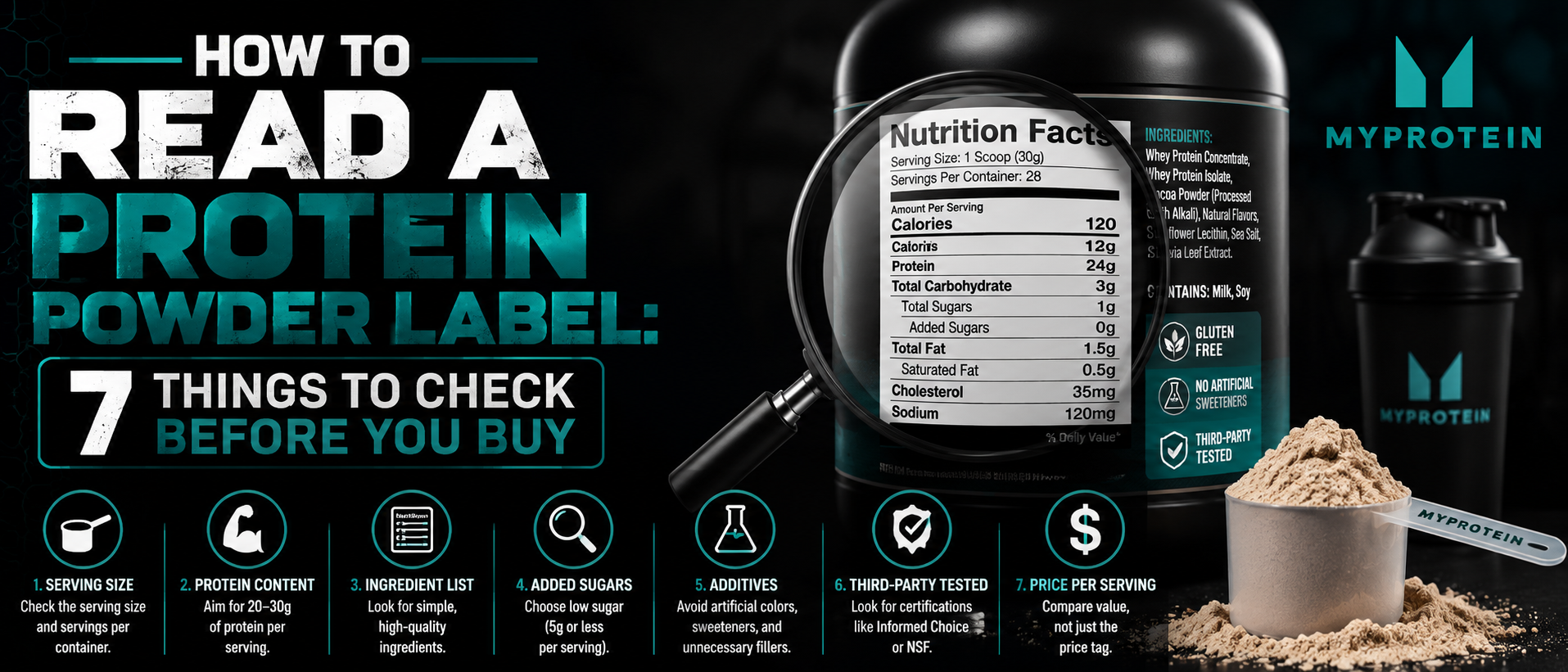
7 Things to Check Before Buying Protein Powder
Before you toss a tub in your cart, run through this mental checklist:- Protein powder nutrition facts—calories, protein, sugar, fat
- Actual protein powder serving size, not just scoop count
- Type of sweetener used, especially if you're sensitive to artificial ones
- Full ingredient list, not just the front-label claims
- Hidden sugars or sugar alcohols
- Third-party testing certifications
- Protein source and amino acid completeness
Final Thoughts
Reading a protein powder label isn't complicated once you know the seven spots to check. It's mostly about ignoring the shiny front-of-tub claims and going straight to the numbers and ingredients that actually tell you something. A little label literacy goes a long way—it saves money, avoids unnecessary bloating or weird sweetener reactions, and helps you actually pick a product that fits your goals instead of just trusting whatever's trending on social media this month.If you're looking for a trusted option after checking all these factors, MyProtein offers a wide range of protein powders with transparent labeling, quality ingredients, and choices for different fitness goals and dietary preferences.
Next time you're shopping, flip the tub around first. Check the nutrition facts, the serving size, the sweeteners, the ingredient order, the sugar content, the certifications, and the protein source. That's it. That's the whole system, and it works regardless of which brand or diet style you're following.
🔍 Check Labels
FAQs
1. What's the most important thing to check on a protein powder label?
If you had to pick just one, it'd be the ingredient list combined with the serving size—because protein-per-serving numbers are meaningless without knowing how much powder that serving actually contains. After that, sweeteners and third-party testing matter most for day-to-day health and safety.
2. Are artificial sweeteners in protein powder dangerous?
For most people, no—not in typical amounts. But some individuals experience bloating, headaches, or digestive discomfort from sucralose or Ace-K specifically. If you notice symptoms after shakes, try switching to a stevia- or monk fruit-sweetened version, or go unflavored.
3. How much protein powder serving size should I actually take per day?
It varies based on your total daily protein needs and diet, but most people do fine with one to two servings (around 20-30g protein each) per day, used to fill gaps rather than replace whole-food meals. Check with a doctor or dietitian if you have kidney issues or other health conditions, since their needs can differ.