 5 months Ago
Updating a Law Built for a Different Era
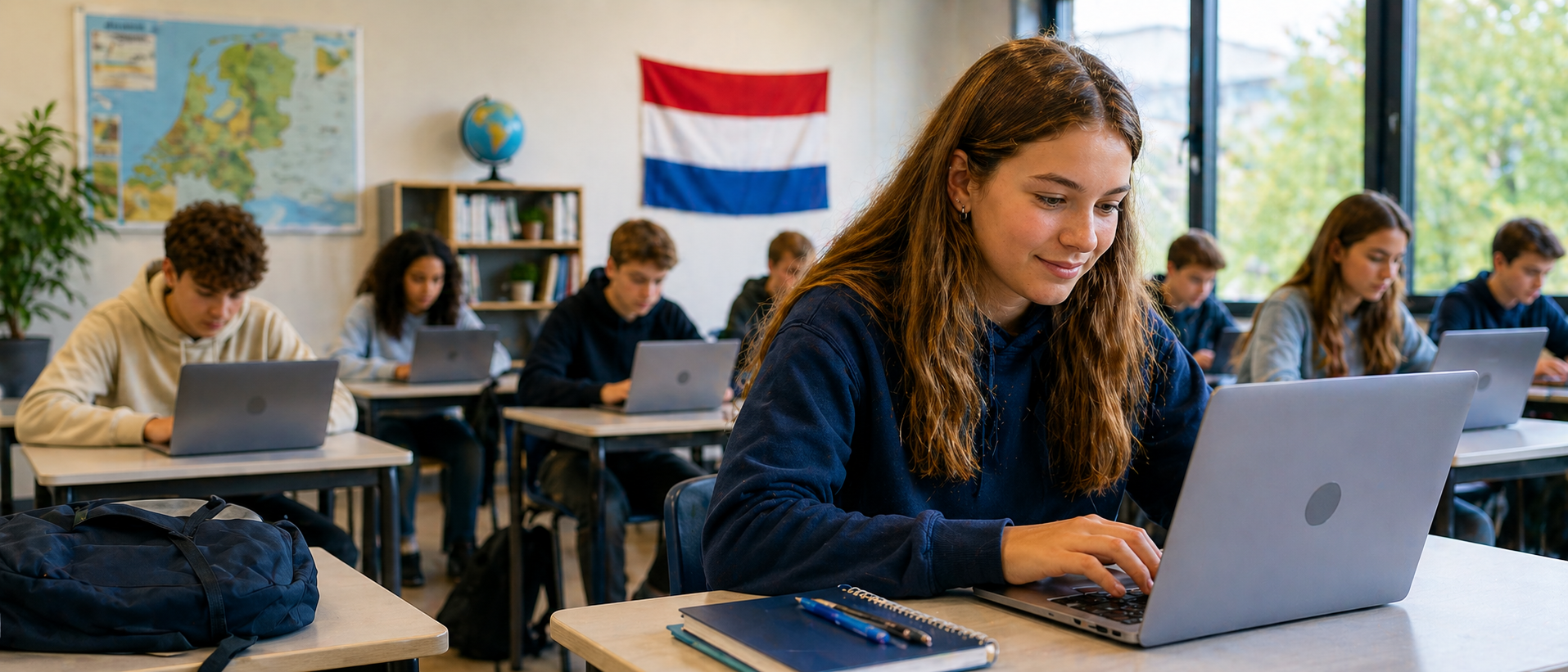
The push centres on the Wet Gratis Schoolboeken, a law passed in 2009 that guarantees free printed textbooks for secondary school pupils. When that legislation was written, laptops were far from standard classroom equipment. That world no longer exists. Today, virtually every secondary student uses a digital device for their education, yet the law has not kept pace. Parents are still expected to purchase or arrange their own devices, creating an uneven playing field from the very first day of school.
The motion now passed by a parliamentary majority directs the government to explore transforming that existing law into something broader — a so-called Wet Gratis Leermiddelen, which would extend free provision to laptops, tablets, and other digital learning tools. Critically, lawmakers want a concrete government response on whether this expansion is feasible by 2027, along with an examination of how schools might partially absorb some of the additional costs from within their own structures.
Three parliamentarians led the initiative: Marjolein Moorman of PRO, Ilana Rooderkerk of D66, and Arend Kisteman of VVD. Their argument is straightforward. Bringing devices under the free materials law would help level the playing field between students from different financial backgrounds and give schools far greater control over the technology used in their classrooms. Right now, many secondary schools operate on a bring-your-own-device basis. The result is a patchwork of equipment — some students arrive with high-spec machines, others with barely functional hand-me-downs — and that gap has real consequences for learning.
The Funding Question and What Comes Next
The Tweede Kamer's motion also asks the government to work alongside education organisations, including the VO-raad and SIVON, to build a clearer picture of how schools are currently managing device provision. The aim is to identify what is already working well across the country and consider scaling those approaches more broadly. It is as much about learning from existing practice as it is about writing new policy.
But the biggest sticking point, as is often the case, is money. Coalition partners VVD and D66 have been firm on one point: no additional government spending should be needed. Their position is that any expansion of the free materials law must be funded from within existing education budgets, without new allocations. PRO takes a more open stance, acknowledging that extra funding might eventually prove unavoidable if the proposal is to work in practice.
That tension between ambition and budget reality will define the next phase of this debate. The government now has until 2027 to come back with answers — whether the expansion is workable, what it would realistically cost, and how those costs could be managed. For hundreds of thousands of secondary students and their families, the outcome could mean the difference between struggling to access the tools everyone else takes for granted and simply showing up to school ready to learn.