 6 months Ago
A Short but Meaningful Exchange
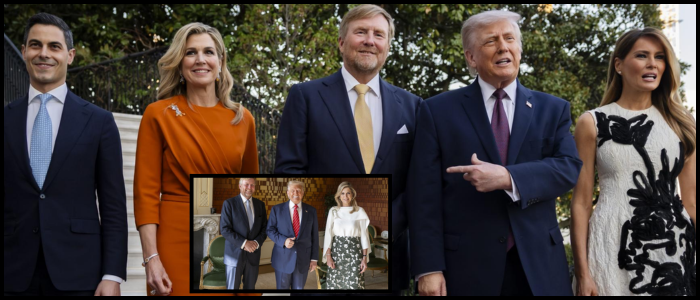
Jetten described the meeting as constructive, even though it lacked the time needed for either leader to influence the other. He emphasized that dialogue, even when limited, remains important during tense global moments. The dinner was attended alongside Willem-Alexander and Máxima, whom Trump referred to as "highly respected people."
Reflecting on the evening, Jetten acknowledged the concerns among Dutch citizens regarding the visit and ongoing international developments. Still, he defended the decision to attend, noting that avoiding such meetings would only reduce opportunities for open discussion. He described the gathering as worthwhile, adding that engagement is necessary to address sensitive issues.
The royal couple's stay at the White House was also notable, as overnight visits are rare. This follows a previous instance when Trump stayed at Huis ten Bosch Palace in The Hague during last year's NATO summit.
Tensions Over Iran and Defense Spending
The meeting took place amid rising tensions between the United States and Iran. European nations have largely opposed the conflict, a position that has frustrated Trump. Jetten pointed out that the U.S. president once again criticized Europe's historically low defense spending, despite recent increases by NATO members. According to Jetten, this issue continues to create friction, with growing dissatisfaction from the American side.
He also addressed the ongoing U.S. naval blockade of Iranian ports. While Trump did not directly ask for European assistance during the dinner, he explained his reasoning for applying pressure on Iran to push for renewed negotiations. Earlier, Jetten had called the blockade "undesirable," but admitted it was still a more measured approach compared to previous threats made by the U.S.
Open Dialogue Despite Differences
Jetten clarified that the conversation was not confrontational. Instead, it was marked by openness and honesty, even when disagreements arose. He stressed that strong relationships allow room for differing opinions without damaging cooperation.
According to him, such discussions are essential for maintaining long-standing ties between countries. Even without immediate agreement, both sides can continue working toward shared solutions by keeping communication channels open.