 6 months Ago
Mayors Push Back Hard as Germany Refuses to Budge
Hubert Bruls, mayor of Nijmegen and chair of the Euregio Rhine-Waal cooperation body representing around 50 regional authorities, has emerged as the most vocal critic. He acknowledged that when Germany first introduced the temporary border checks in 2024 in response to migration pressures and public order concerns, he was willing to give the policy a chance. But about a year and a half on, his patience has run out. Migration numbers have fallen, he argues, yet the controls have effectively become permanent — a situation he finds both disproportionate and legally questionable. "The question you now really have to ask is whether this is still in line with European law. And if I may believe legal experts, it is not," he said.
Bruls also turned his criticism toward the European Commission, expressing disappointment that Brussels has not stepped in to challenge a member state he believes is bending the rules. He said it is increasingly difficult to explain to ordinary citizens why they must comply with European regulations when a member state appears free to ignore them.
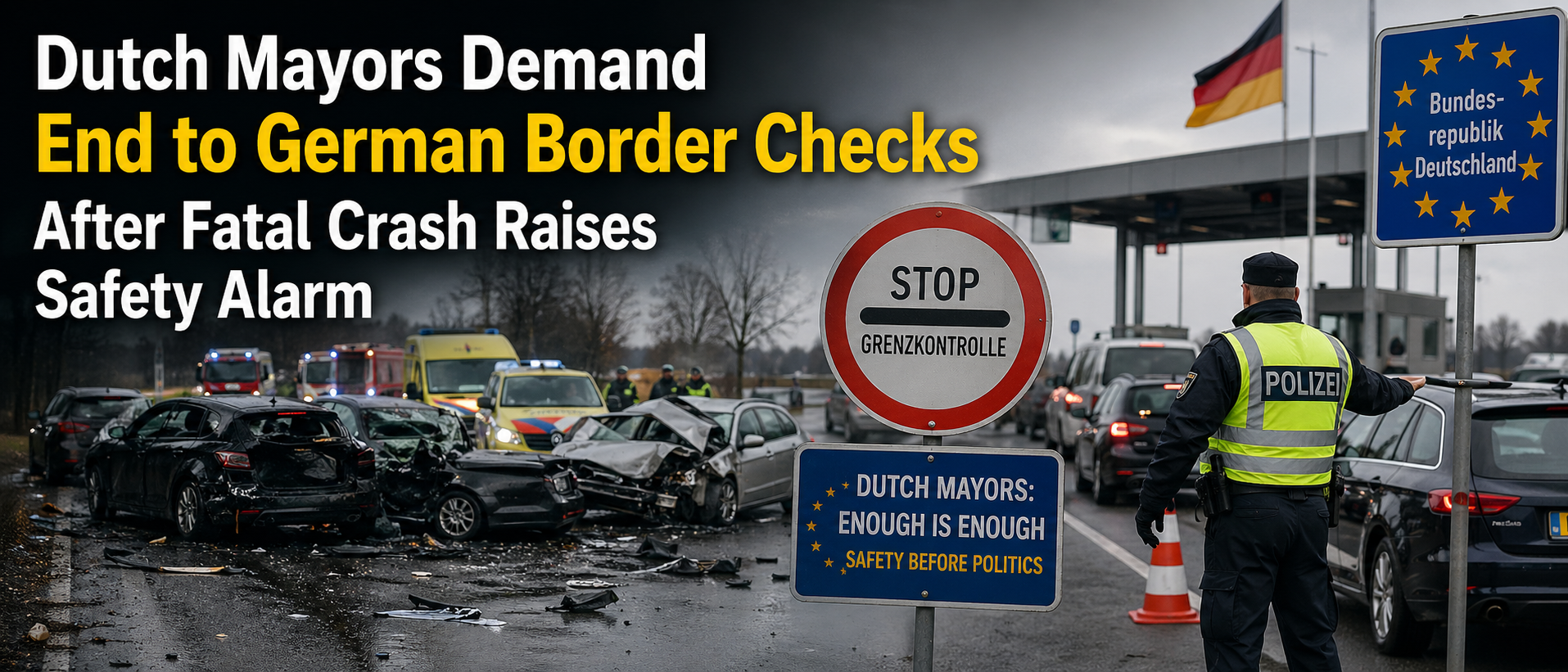
Mark Boumans, mayor of Doetinchem, echoed that frustration following the Babberich crash. He said he is deeply disappointed that Germany has been unable to come up with a solution that limits migration without generating such severe and repeated side effects. Several municipalities, including Zevenaar, Montferland, and Emmerich, have formally urged Germany's Interior Ministry to shift checks away from the actual border and instead rely on mobile inland enforcement. The response from German authorities was blunt and brief: "Nein." Officials on the German side maintain the system is functioning as intended and will continue.
Economic Damage Mounts as Political Patience Wears Thin
The consequences extend well beyond the tragic accidents. Border villages have been overwhelmed by diversion traffic as drivers seek alternate routes to avoid checkpoint delays. Transport and Logistics Netherlands has estimated that the resulting disruptions have already cost the freight sector millions of euros in losses — a figure that continues to grow with each passing month.
Bruls has also pushed back on Germany's defense of the policy, which has pointed to results such as the arrest of more than 150 suspected human smugglers along the entire border. He dismissed this as insufficient justification, arguing that those arrests likely would have happened anyway and that catching unrelated criminals at a migration checkpoint is beside the point. The controls, he noted, were never designed for general law enforcement purposes.
In a pointed remark, Bruls suggested Germany's energy would be better directed elsewhere. He said he would genuinely welcome German assistance in December to help enforce Dutch fireworks restrictions near the border — a practical problem he considers far more pressing than the current focus on refugee movement.
With the controls due for another scheduled review in September, and an extension widely expected, the pressure from Dutch municipalities is only likely to intensify in the months ahead.