 3 months Ago
Spain's Record-Breaking Campaign
This win gave Spain its second World Cup title and its first since 2010, making it the seventh nation to lift the trophy more than once. They also became only the third team to win the World Cup while holding the European Championship title, joining Spain's 2008-10 side and West Germany's 1972-74 team.
Spain's defense was the backbone of their run. They kept seven clean sheets across the tournament, the most ever recorded in a single World Cup, and let in just one goal the entire competition, conceded to Belgium's Charles De Ketelaere. That makes them the stingiest champions in World Cup history, with only Switzerland managing a fully goal-free tournament before, back in 2006, though they were knocked out in the round of 16 after a scoreless draw. On the expected goals front, Spain conceded just 2.3 xG across the whole tournament, working out to 0.3 per match, the best defensive number by expected goals since 1996.
Their unbeaten run now stretches to 38 games across all competitions, surpassing Italy's previous record streak from 2018 to 2021. Spain has also won six of their last seven major tournament finals, a phenomenal ratio matched by very few nations. Only Germany has won more major European titles overall.
Milestones For De La Fuente, Yamal And Teammates
Manager Luis de la Fuente made history of his own, becoming the oldest coach ever to win a World Cup at 65 years and 29 days old. He also remains unbeaten in all 15 matches he has managed at major tournaments, the longest such streak by any coach across both the World Cup and European Championship.
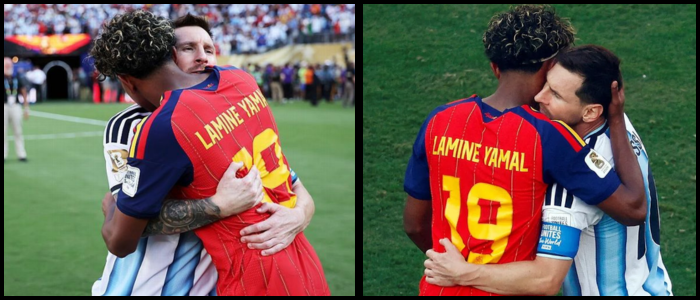
Lamine Yamal continued his remarkable rise, becoming, at 19 years and 6 days old, tied for the fourth-youngest World Cup winner ever. Teammate Pau Cubarsí sits just behind him as the seventh-youngest at 19 years and 178 days. Yamal is also only the third-youngest player to ever feature in a World Cup final, trailing just Pelé in 1958 and Giuseppe Bergomi in 1982. With this win, he became the first teenager in history to win both the European Championship and the World Cup.
There was more individual recognition for Spain's squad. Fabián Ruiz became just the tenth player ever to win both the World Cup and Champions League in the same season, having started in both finals. Cubarsí also impressed with the ball, completing 121 passes in the final, the second-highest total in a World Cup final over the past 60 years, behind only Brazil's Dunga, who managed 130 back in 1994.
Spain also swept several individual awards. Rodri picked up the Golden Ball, becoming the first Spaniard to do so, and the first Golden Ball winner to actually be part of the winning team since Brazil's Romário did it 32 years ago in 1994. Cubarsí was named the tournament's Best Young Player, another first for a Spanish player. At the same time, goalkeeper Unai Simón claimed the Golden Glove, becoming only the second Spaniard to win that award.
Heartbreak For Argentina, History For Messi And Mbappé
For Argentina, the final brought a difficult end to their title defense. They became the fourth defending champion in a row to finish as runners-up, following Argentina in 1990, Brazil in 1998 and France in 2022. This was also the third time in Argentina's last four World Cup final appearances that they ended up on the losing side. Their 13-match unbeaten run at the World Cup came to an end too, marking their first defeat at the tournament since losing their 2022 opener to Saudi Arabia. Strangely, Argentina failed to register a single shot on target in the final, only the third time that has happened in a World Cup final over the last six decades, with the other instances coming in 1990 and 2014.
Even in defeat, Messi added to his legendary résumé. He became the first man ever to start three World Cup finals and only the second player, after Brazil's Cafú, to appear in three finals overall. He also captained his side in all three, another first. At 39 years and 25 days old, he became the oldest outfield player ever to start a final, though his 54 touches marked one of the fewest he's had in any World Cup start. The final also marked the first time in World Cup history that two starting players were more than 20 years apart in age, with Messi and Yamal separated by exactly 20 years and 19 days.
Argentina's goalkeeper Emiliano Martínez had a final to remember individually, making 11 saves, the most by any goalkeeper in a World Cup final in 60 years. Argentina's Enzo Fernández also became the sixth player sent off in a World Cup final, the first since the Netherlands' Johnny Heitinga against Spain back in 2010. On a brighter note for France, Kylian Mbappé became the first player ever to win the Golden Boot as top scorer in two separate World Cups, adding to his 2022 achievement. In one odd bit of trivia, the halftime break in the final stretched to 27 minutes and 24 seconds.