 1 hour Ago
A Familiar Style Returns
Football fans have long used the phrase "passing carousel" to describe a team that keeps the ball moving so smoothly that opponents end up chasing shadows. The term was first used to describe Barcelona's style under Frank Rijkaard, before Pep Guardiola pushed the idea even further in the years that followed. Spain's national team made the phrase their own during their World Cup-winning run in 2010. Still, in this tournament, that identity had mostly stayed hidden beneath the surface.
Spain's road to the semifinal had been far from spectacular. They opened with a goalless draw against Cape Verde and ground through the knockout rounds without ever fully showing their attacking potential. Substitute Mikel Merino had been the difference in their last two matches, pulling them through tense moments that threatened to drag on into extra time.
Meanwhile, France arrived in Texas as many people's favourite. Their front three of Kylian Mbappé, Ousmane Dembélé and Michael Olise had been electric throughout the tournament, tearing through defences with pace and directness. Casual fans expected a tight, cagey affair. What they got instead was a masterclass in patience and control, leaving France with almost no answers.
Thirty Seconds That Changed Everything
The buildup to Porro's goal began deep in Spain's own half, with Marc Cucurella starting a passing sequence that worked its way through Aymeric Laporte, goalkeeper Unai Simón, Rodri, Fabián Ruiz and eventually Porro himself. On the surface, it looked like aimless possession, the kind of passing that seems to go nowhere. But while the ball moved from man to man, France's shape was slowly falling apart as their players chased without ever getting close enough to make a real challenge.
That's when Laporte found space to slide a simple pass through to Dani Olmo, who ran unchallenged into French territory before laying the ball off to Álex Baena. Baena's effort on goal was blocked but bounced straight back to him, and he squared it to Rodri. The Spanish captain tried an aerial ball toward Lamine Yamal inside the box, which France managed to head clear, only for the ball to fall once again to a red shirt. Ruiz brought it under control, linked back up with Rodri, and the carousel kept spinning.
Throughout the match, the midfield trio of Rodri, Ruiz and Olmo had complete control of the game's tempo, despite none of them arriving at the tournament in peak form after difficult club seasons. Ahead of them, Yamal caused constant problems down the right, Baena worked tirelessly on the left, and Oyarzabal kept France's centre-backs from ever settling into a rhythm. As in 2010, Spain's strength wasn't built around one standout individual. It came from the way the entire team moved and thought as one unit.
Porro Delivers The Decisive Blow
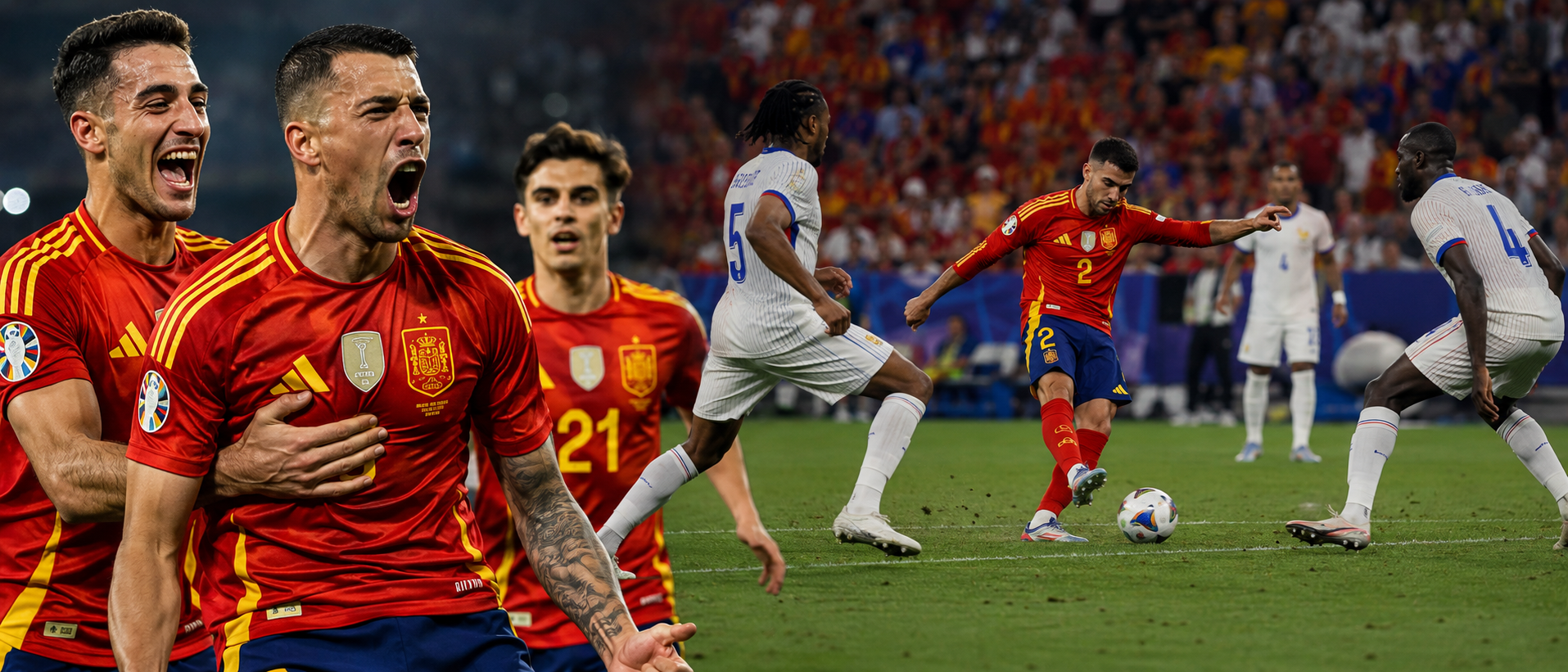
When Ruiz eventually found Porro out wide on the right, it looked like another routine pass in an endless sequence. Instead, Porro cut inside, played the ball into Olmo's path, and immediately sprinted toward the French box, gesturing exactly where he wanted the return pass.
Olmo, under heavy pressure from Dayot Upamecano, managed to thread the ball into precisely that spot despite being off balance. By then, Yamal had already dragged Lucas Digne out of position, and Oyarzabal had pulled Maxence Lacroix higher up the pitch, leaving Porro with plenty of room to work with. He took two calm touches before slotting the ball past goalkeeper Mike Maignan to make it 2-0.
Porro's involvement was notable given his form heading into the tournament. He had struggled for consistency at Tottenham Hotspur during the club season and began the World Cup on the bench. Coach Luis de la Fuente turned to him after Spain's flat opening match against Cape Verde, looking for more attacking threat down the right side. Porro repaid that trust with a goal against Austria in the round of 32, and by the semifinal, his place in the lineup was no longer in question. Even though he was expected to focus mainly on defensive duties against France's dangerous wingers, Spain's dominant possession, they finished the match with 68 percent of the ball, gave him the freedom to push forward repeatedly.
By the time Porro's shot hit the net, France's players could only exchange glances of disbelief. On the touchline, manager Didier Deschamps looked stunned, watching his side dismantled in a way France hadn't experienced across four previous World Cup campaigns. With more than half an hour still to play, the result already felt certain.
That single passage of play, stretching from Cucurella all the way to Porro, summed up exactly what Spain is capable of when they shift into top gear. Porro's finish wasn't just a goal. It was the exclamation point on a performance that sent a clear message to France: their World Cup run was over, and Spain were headed to the final.