 3 months Ago
Empty Stations and Quiet Streets
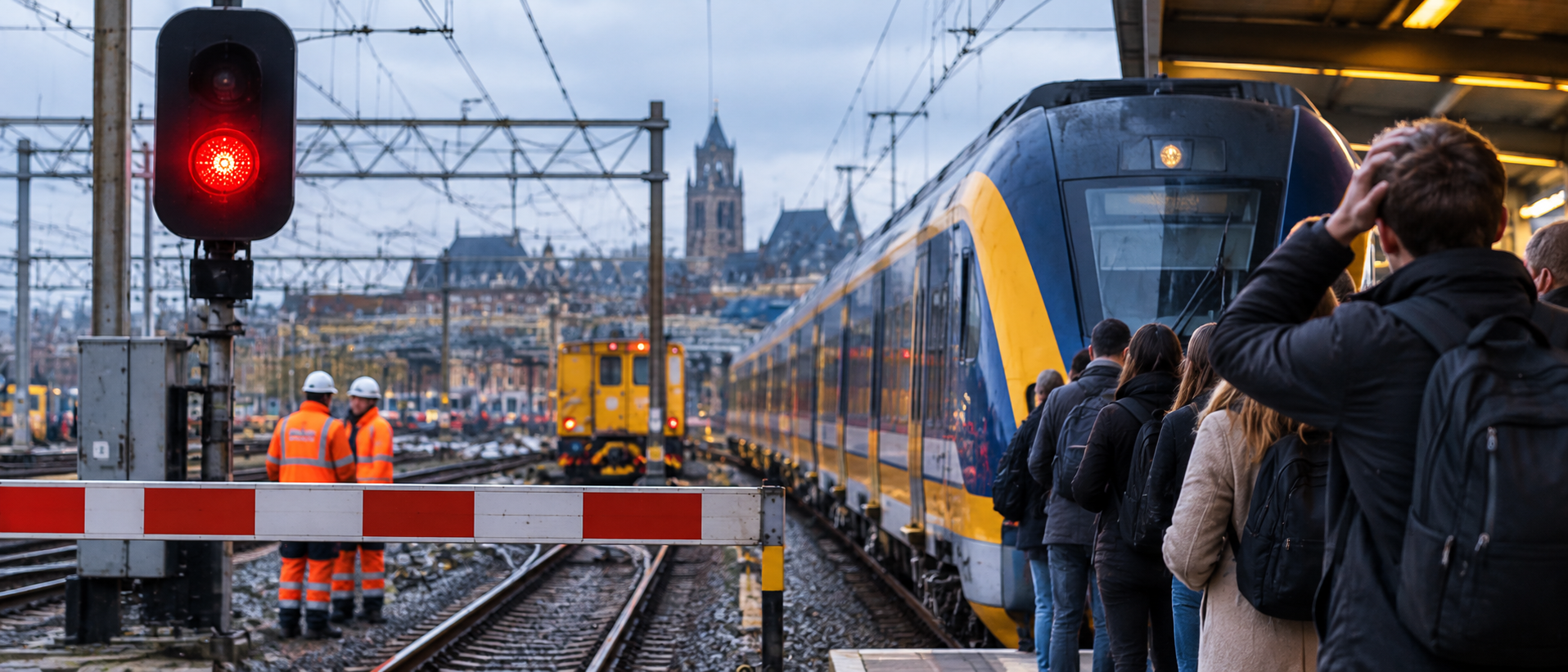
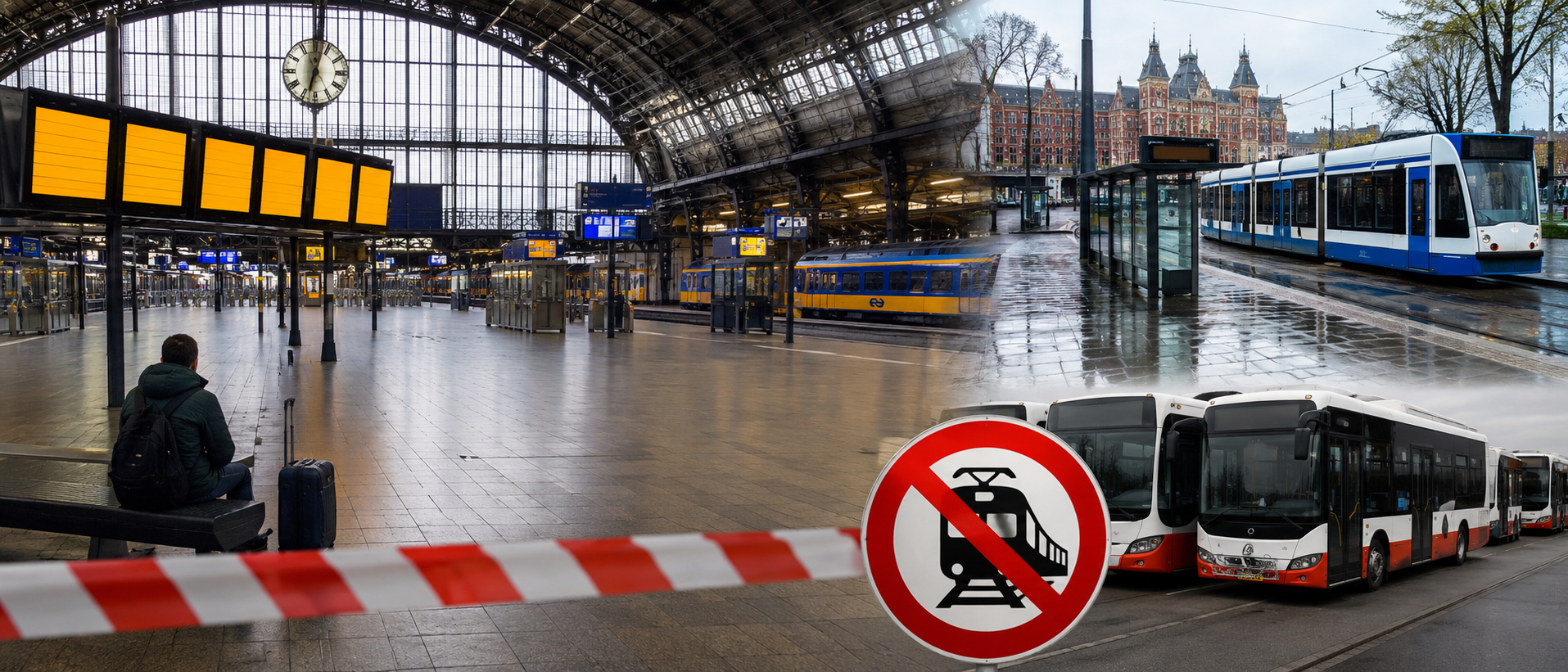
Amsterdam Central Station looked almost ghostly at 6 a.m. A few travelers sat quietly on benches with their luggage, but the usual morning energy was completely absent. Travel boards flashed strike notices, and announcements echoed through an otherwise silent hall. The tram stop just outside the station sat empty. However, not everything stopped. Ferries crossing the IJ from Amsterdam Central to Noord continued operating, and the train connection to Schiphol Airport kept running throughout the strike period.
Some regional operators managed to keep a handful of routes alive. Arriva ran what it could based on staff availability, maintaining at least the Leer–Groningen bus route. Keolis operated limited services across Midden-Nederland and Oost-Nederland. But major city operators GVB in Amsterdam and RET in Rotterdam suspended their full schedules until the strike ended, with RET warning that normal operations might not fully resume until at least 11 a.m.
Commuters were advised to work from home if possible, particularly during the morning hours, and to check travel planners before heading out. Road traffic authority ANWB said it did not expect major congestion, partly because fewer school-run commuters are on the roads during this period as vacation season begins. Wednesday mornings also tend to be quieter on Dutch roads compared to other weekdays.
Why Workers Are Striking
The strike was organized by trade unions FNV and CNV in direct response to the Dutch Cabinet's plans to cut billions of euros from social security programs, specifically unemployment benefits known as WW, disability support under WIA, and state pension provisions under AOW. Workers argue these cuts will hit ordinary people hardest and create lasting financial insecurity for millions.
The government maintains that the reforms are necessary to stabilize public finances, fix structural problems in the system, and encourage more people into the workforce. The Cabinet did walk back some proposals under union pressure, including plans to speed up increases to the state pension age and certain elements of the WW and WIA cuts. But unions say those concessions fall far short of what is needed.
FNV made clear on Tuesday that further strikes are on the table if the government does not fully drop its plans after the summer. FNV Spoor representative Henri Janssen called the cuts disastrous and warned that a full 24-hour strike could follow. Transport operator Arriva expressed strong frustration, with spokesperson Nikkie Smit saying it is not acceptable for public transport to be used as a pressure tool. NS chief executive Wouter Koolmees, himself a former government minister, said he felt bad for passengers but acknowledged that labor action sometimes becomes necessary to push demands forward in the Dutch political process.