 5 months Ago
Where the Price Gap Hits Hardest
Not all product categories carry the same premium, and some gaps are striking. Organic vegetables, fruit, chips, sauces, and tea tend to cost more than double their conventional counterparts. One of the most dramatic examples involves black tea —a 20-bag pack of organic black tea averages 2.27 euros, while the non-organic version costs just 0.32 euros, making the organic option roughly seven times more expensive.
On the other end of the scale, categories like pasta, rice, and dairy show far smaller differences. There are even cases where organic works out cheaper. A 500-gram pack of organic whole-wheat spaghetti, for instance, runs about one-third less than its non-organic equivalent — a rare but welcome exception to the general trend.
When it comes to where to shop, Lidl stood out for offering the lowest prices on organic goods overall. Odin and Ekoplaza ranked among the priciest but compensate with the broadest organic selections available. Albert Heijn, Jumbo, and each carry more than 1,000 organic products, while ALDI and Nettorama lag well behind with fewer than 50 organic items apiece.
Discounts, Labels, and What It All Means
There are ways to soften the financial blow, depending on where and how much you buy. Albert Heijn's Premium subscription takes 10 percent off organic products, Picnic offers savings on bulk purchases, and Odin members can access a 15 percent discount through a membership plan. Whether those deals make a meaningful difference ultimately comes down to shopping habits and volume.
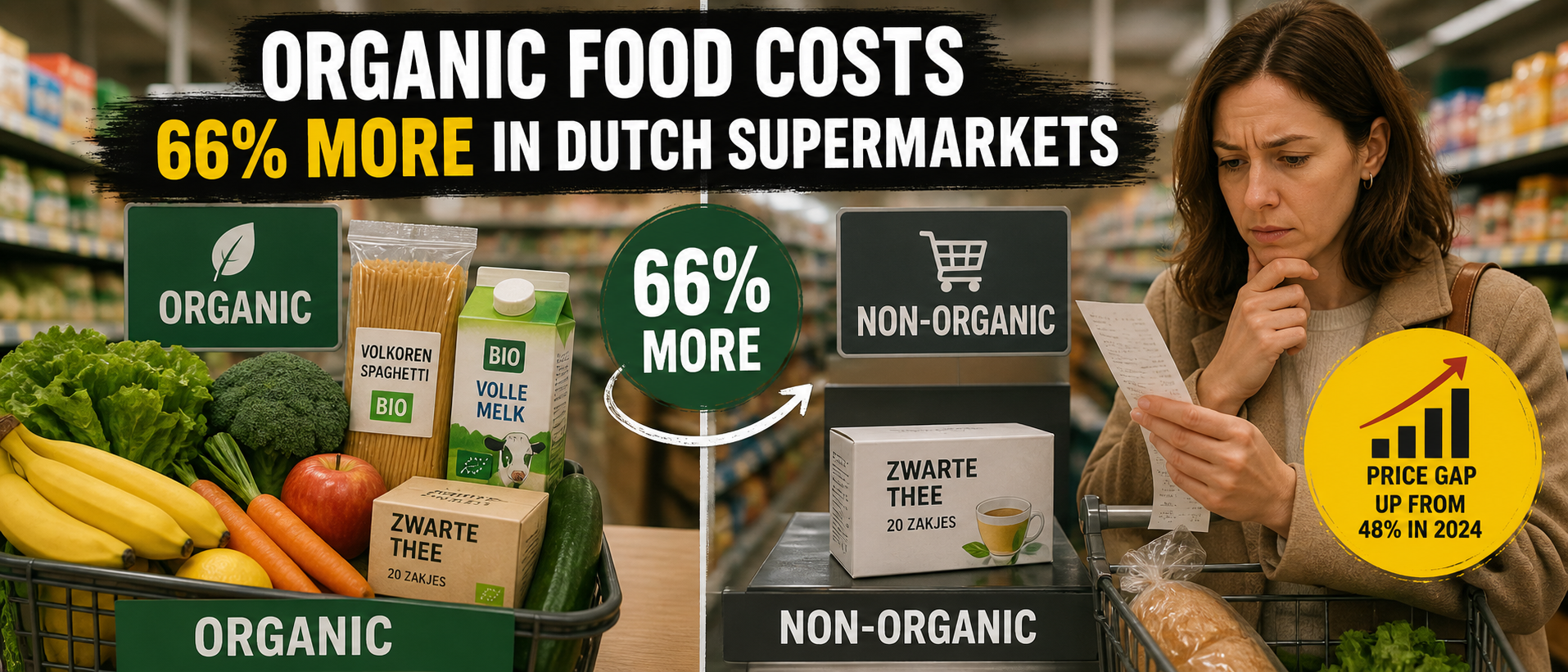
It is worth noting that the organic label is not freely given. Under European Union rules, products may only carry the EU organic certification if they meet strict production standards — fruit and vegetable growers, for example, are limited to pesticides and fertilizers derived from natural sources. That assurance carries real value for many consumers, but with the price gap now back at 66 percent — up sharply from 48 percent recorded in 2024 — the question of whether sustainable choices remain financially accessible for ordinary households is becoming increasingly hard to ignore.