

 6 months Ago
By next month the Ministry should be able to tell the world what precisely they need - including the number of deployment trucks, large cargo vehicles, and personnel. In exchange, firms may get long-term paid contracts for tailor-made vehicles — tank low-loaders, and haulage containers for ammunition and dangerous goods, for instance.
Concerns About Russian Mobilization Out of the Blue
Sources have cautioned that Russia could move up to 300,000 men into Kaliningrad within 48 hours. "Think about 300,000 Russian troops in Kaliningrad. That makes you nervous. You have to be able to move equipment quickly."
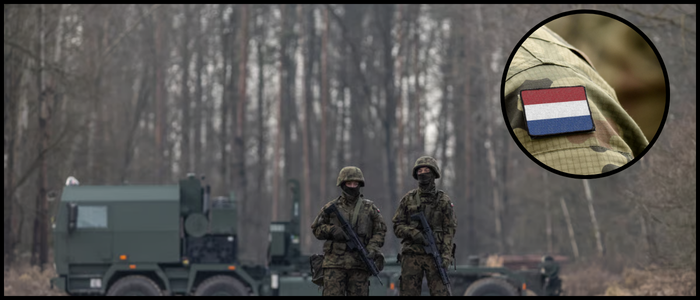
At the moment, the Dutch military does not have the number of vehicles and staff needed to undertake such an operation. Laws to commandeer private equipment in an emergency can only be invoked during wartime. So, instead, the government is talking with private logistics companies about signing contracts to be at the ready for use, both in peace and turmoil.
Private Sector On The Frontlines Now
Defense Minister Ruben Brekelmans has been in talks with business leaders and has visited military bases to try to communicate the urgency. At an event in Rotterdam recently, he was said to have told the transport sector: "We're not at war, but we're in no-man's land either."
The Ministry is adding more companies in the new tender due in July. Already, two companies — Van der Vlist and Jan de Rijk— have confidential contracts with the military.
For the likes of "Arnold" (pseudonym) who own a transport company it is a new and disquieting challenge. "That we're even having this conversation is crazy," he said. "Few Dutch people want to fight, but if you're a business owner, we're willing to support it."
Logistical and Workforce Challenges
Elisabeth Post, directeur van Transport en Logistiek Nederland (TLN), beschouwt een snelle reactie zelfs als eerste vereiste: "Als je niet snel aan goederen kan komen voor je veiligheid, dan heb je een probleem."
But it's not enough to just give them trucks. Companies have to show they can lend a hand without crowding out other crucial services like deliveries to supermarkets or hospitals. Driver availability is also a concern. Many Dutch companies depend on drivers from Eastern Europe, who could be recalled by their home countries if war does break out.
Indeed, for its 2023 survey, the Defense Ministry also included a question asking how many trucks companies could offer using solely Dutch personnel, and the result was a reduction in the number of trucks — from 1,590 to 660. The number of forklifts also dropped — from 600 to 130.
Push for Civilian Reservists
The Ministry is now also requesting companies to help identify potential reservists — employees prepared to train and serve part-time with the military. Some employers, like Arnold, have even been asked how many they might be able to provide. "I don't know of a single person who is a reservist, but we were told the order will ask how many we could supply — 10, 20, even more."
This raises a hard issue: Who drives the trucks in a real conflict? Military vehicles have always been fair game under international law. A defense official said: "Can you ask your staff to take that risk? Or should only men with uniforms drive them?"
I'm still deciding," Arnold said. "If it's a training, we'd drive. But war is different. You can't guarantee your staff's well being. That has to be their choice."


