 6 months Ago
Environmental Permitting Issues
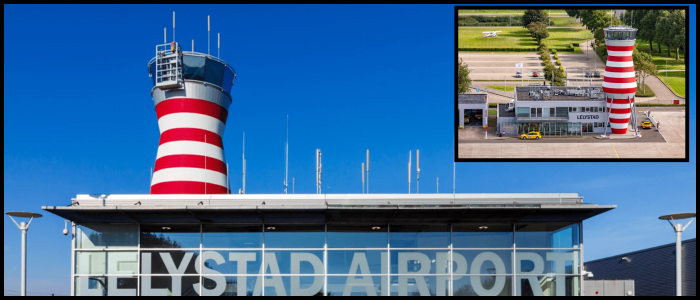
The absence of an environmental permit for Lelystad Airport is one of the largest obstacles to establishing commercial aviation operations. Experts suggest that the chances of getting this permit soon are slim, due in large part to nitrogen emissions (Nitrogen is a major environmental issue throughout the Netherlands).
The Netherlands has mandatory legal requirements to reduce nitrogen deposition between now and 2030, so that at least 50% of its nature reserves are in no danger of being damaged, and this percentage will increase to 74% by 2035. The Netherlands Environmental Assessment Agency recently stated that "it is highly unlikely" that these targets will be met.
Raoul Beunen, Professor of Environmental Law at Utrecht University, stated that the nitrogen levels are currently too high in many areas. He pointed out that opening Lelystad Airport for large-scale commercial air traffic will result in an increase in nitrogen deposition (i.e., pollution) from aviation, especially in areas where there is already a protective designation.
Effect on Nature Reserves
The closest concern is the Veluwe nature reserve. Experts state that the Veluwe Nature Reserve has an unacceptable condition in regard to its current conservation status; therefore, adding any additional nitrogen pollution would not be acceptable. This could potentially lead to the denial of permits to operate commercial flights at Lelystad Airport.
As well as the potential for harm to De Wieden Nature Reserve and De Weerribben Nature Reserve, Veluwe is the major reason for the denial of permit applications for commercial flight operations at Lelystad Airport.
Outlook Long Term
In the instance where the government lacks the ability to offset nitrogen emissions created by Lelystad Airport, it is possible that nitrogen reductions achieved through the public sector could instead be used to restore natural habitats, rather than support future commercial aviation at the airport. This would also create an extensive delay in establishing commercial aviation at Lelystad Airport.
The timeline for large-scale measures to reduce nitrogen levels (air pollution) will take a significant period of time to implement and demonstrate a meaningful reduction in nitrogen deposition within the Netherlands. The Cabinet currently plans to achieve a 50% reduction in ammonia emissions (the largest source of nitrogen deposition) by 2035. Therefore, it is unlikely that the Lelystad Airport will have an active environmental permit before 2035, and thus, no commercial operations can be planned.