 3 months Ago
Confidence Is Low, and the Concerns Are Not Unfounded
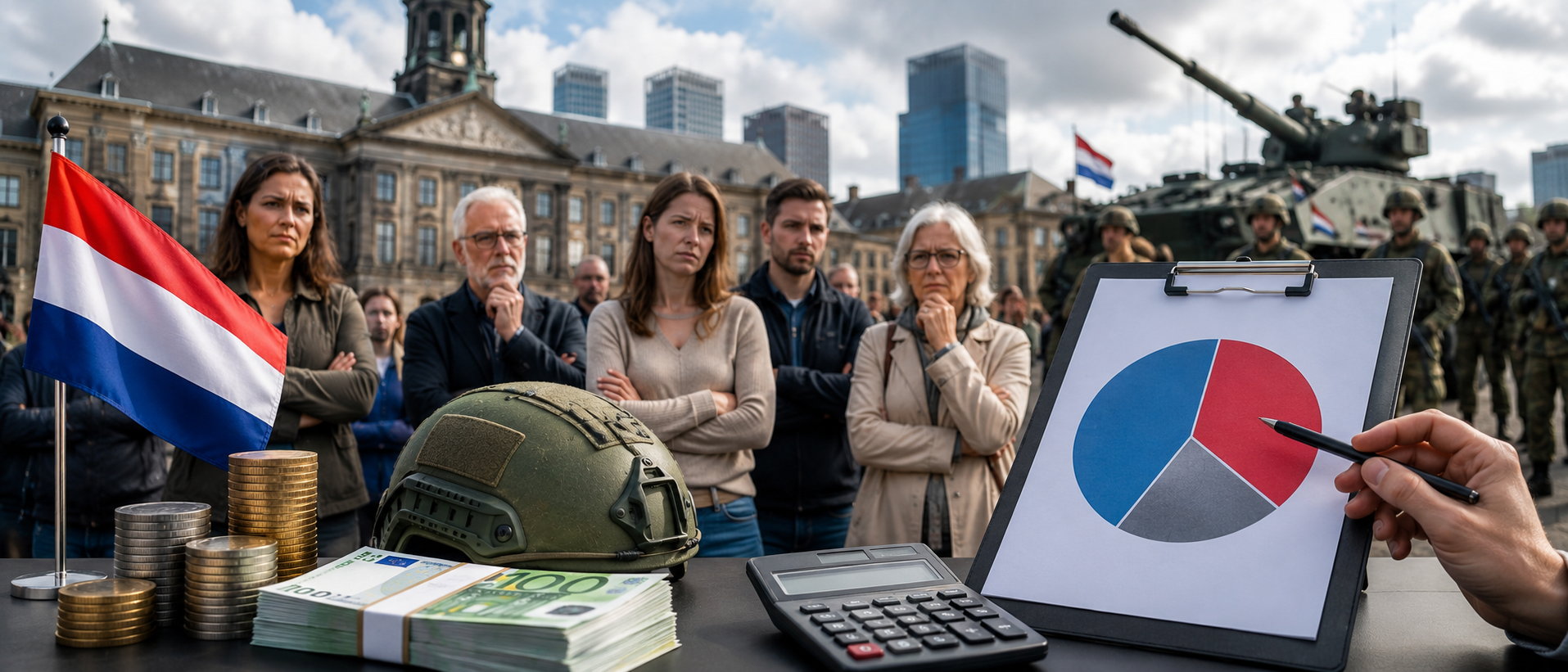
Lead researcher Bart van den Berg summed it up plainly. "Support for higher defense spending is strong; people really see the necessity," he said. "But people do wonder whether Defense will manage to spend it properly." He added that concerns about efficiency are legitimate given the scale of funds involved, describing public skepticism as "a healthy and realistic question."
Those concerns have some official backing too. A report published in May by the Dutch Court of Audit found that the Ministry of Defense does not consistently follow proper procurement rules, including in cases where large sums of money are at stake. Van den Berg noted that the new study's findings aligned closely with what the Court of Audit had already flagged.
The context here is significant. The Netherlands is ramping up defense spending under the NATO framework agreed at last year's summit in The Hague. Under that agreement, member states are aiming to spend 3.5 percent of gross domestic product on defense, plus a further 1.5 percent on related areas including cybersecurity and infrastructure such as roads and bridges — bringing the total target to 5 percent of GDP. That is a lot of money. And Dutch taxpayers are watching.
Van den Berg said political leaders must now step up and communicate clearly. "It is a conversation about scarcity; the money has to come from somewhere else. Clear communication about spending will be the major challenge if you want to maintain public support. There is a clear signal here," he said.
Divided Views on NATO Targets and Willingness to Fight
Public opinion on the 5 percent NATO spending target is not uniform. Just over 40 percent of Dutch respondents said the benchmark is exactly right. Nearly one-third felt it was too high, a view found mostly at the political extremes. A smaller group said the target was actually too low — a position researchers described as relatively unusual given how ambitious the figure already is.
Van den Berg pushed back against any suggestion that disagreement with the percentage equals disengagement. "People wonder why that percentage is not higher or lower. That is not the same as acting on it," he said. He also cautioned that pouring more money into defense does not automatically produce a more capable or efficient military. "Defense is a steamship, not a sports car," he told reporters. "It takes time to rebuild that industry. The faster you build, the more inefficiencies you will encounter."
On the question of personal commitment to national defense, the study offered something more encouraging. Among people aged 35 to 64, half said they would be willing to personally fight for the Netherlands if it came to that. Among those aged 18 to 35, the figure was 48 percent. Van den Berg pushed back against any narrative of Dutch passivity. "The idea that Dutch people are not willing to stand up for their interests is not true. The closer it gets to home, the more people feel it."
Still, when compared to Finland — where more than 70 percent of people aged 18 to 25 say they would be willing to take up arms for their country — the Dutch numbers tell a quieter story.