 1 year Ago
Aim at Apple on Foreign Production
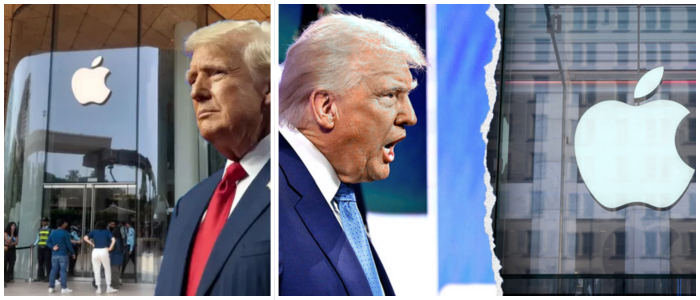
Apple shares dropped 3% on Friday after Trump reiterated in a public talk that he had long expected iPhones sold in the United States to be made in America. He said he had previously communicated these expectations to Apple CEO Tim Cook.
"If that is not to be the case, the U.S. will decide how much of a 25% tariff China pays us for the privilege of doing business with the U.S.,"Trump wrote.
Apple has not commented publicly in response to the warning so far, it coincides with reports that Apple is close to completing a $1.5 billion plant in India that will make components for the iPhone. More than 50% of iPhones are currently made in China and the work is expected to move completely to India by 2026.
This potential tax would also affect Samsung and other companies that import such products, Trump said, explaining it was needed for fairness. If manufacturing does not move to the U.S., he said, tariffs could be imposed as soon as late June.
Wider Business Tensions and Market Impact
The tariff threat is only the latest in a string of battles between Trump and big U.S. businesses:
Walmart was earlier slammed by Trump for predicting higher prices, with the former president demanding the company "EAT THE TARIFFS."
Mattel, creator of Barbie, was warned of a 100 percent tariff if the company didn't relocate the production of toys to the United States.
Amazon got slammed by Trump for its plan to show tariff charges at checkout.
Trump's words sent broader financial markets skittering. On Friday, the S.&P. 500 fell 0.67 percent, recording its first meaningful weekly loss in the last month. Apple is down about 20% in 2020, in part because of fear of manufacturing disruptions and who has an edge in AI.
Implications for the Economy and Politics
What Trump is doing is not the usual tendency of U.S. leaders who intervene indirectly. He said companies that made products in America would not be subject to tariffs, and that bringing production back to the United States would be rewarded.
The move was backed by treasury secretary Scott Bessent, who contended that the semiconductor and tech supply chain is insecure in the US, and Apple could help fix that.
Analysts, however, are doubtful that the relocation of iPhone manufacturing to the U.S. is realistic: Wedbush Securities analyst Dan Ives described it as a "fairy tale," and said an iPhone manufactured in the U.S. could cost between $1,500 and $3,500.
With the trade tensions ramping up with China and the European Union — Trump also threatened a 50 percent tariff against the EU — businesses are bracing for more volatility in the trades in which America is engaged globally, as well as within its supply chains in the United States, as a consequence of the protectionist moves.