 1 month Ago
Trees Turning Brown Months Too Soon
"It looks like autumn," said Jaco van Heemskerk as he walked through the woodland, where several trees have already turned orange-brown and begun dropping their leaves well ahead of schedule. According to him, the trees have shifted into a kind of survival mode, cutting back on water use just to stay alive. "But they still have to hold on for a while," he said, adding that no major rain is expected in the near future. He admitted he wouldn't be surprised if some of the trees simply don't make it.
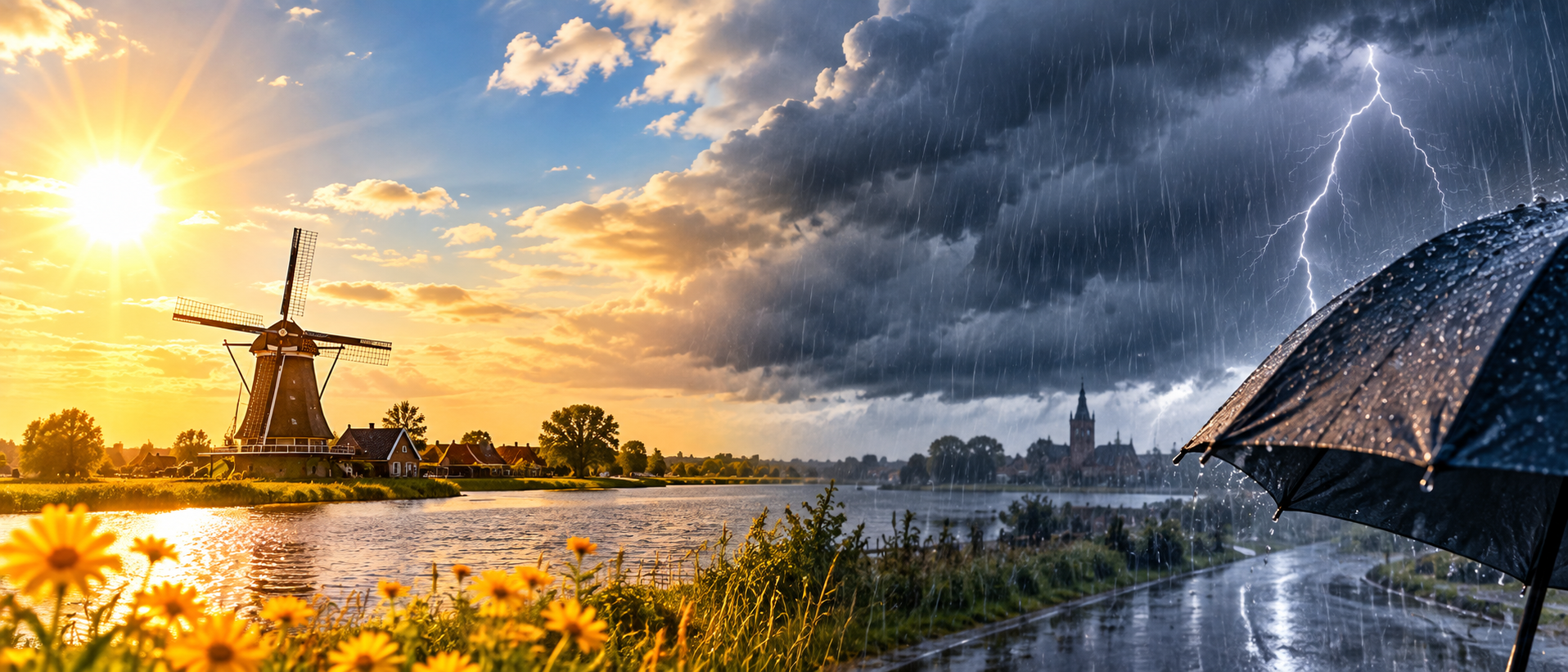
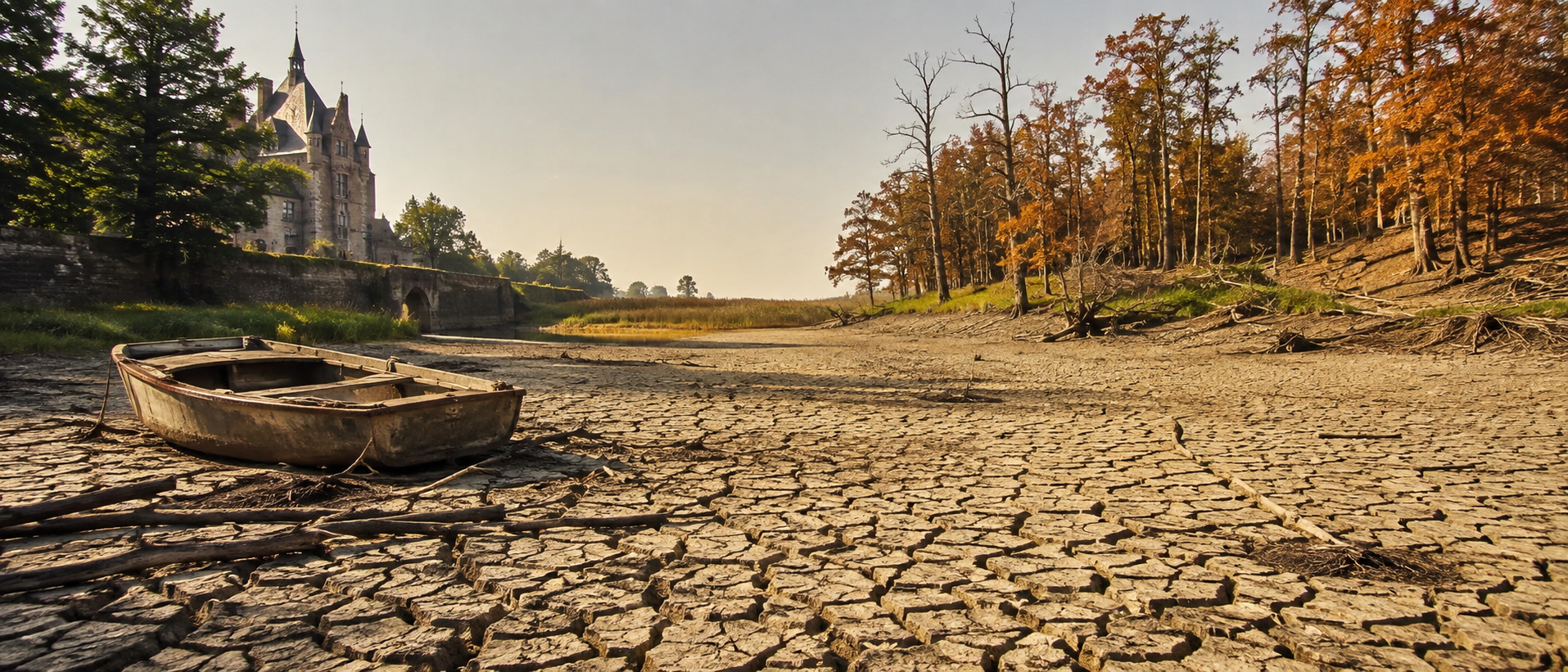
The physical signs of stress are visible everywhere. The moat surrounding the nearby castle has completely dried out, with water levels down by more than a meter and a boat now sitting exposed on the bare bottom. The ground itself has started to crack from the lack of moisture.
Van Heemskerk noted that brief dry spells aren't usually cause for concern, since nature tends to bounce back from short-term swings. This time, though, the dry stretch has dragged on far longer than usual, and Zeeland is one of the hardest-hit regions in the country in terms of rainfall shortfall.
Groundwater data he reviewed tells a troubling story. Levels in the dunes near the forest fell steadily from January 2025 through October of that year, recovered slightly through February 2026, and then dropped sharply once again. "In fact, the drought already started in January 2025," he explained. Groundwater levels, he said, have now sunk below where they stood during the summer of 1976, long considered the driest in Dutch history. "This is a new low point."
Wildlife Losing Ground as Habitats Vanish
The consequences are stacking up. Trees are dying off, and dune plants such as orchids may vanish altogether. Elsewhere in the country, amphibians like the crested newt and garlic toad are struggling as the pools they depend on evaporate. Streams have run dry, heathlands are showing heavy signs of stress, and insects such as dragonflies and butterflies are losing the habitats they need to survive. "This drought can be fatal for some animals and plants," van Heemskerk said.
About 10 kilometers east of the dunes lies Plan Tureluur, a wetland reserve built up from 1,000 hectares of former farmland over the last two decades. It's home to birds including avocets, spoonbills, and black-tailed godwits. Even here, weeks without rain have left cracks spreading across much of the land, though a few pools of water remain.
That remaining water matters more than it might seem. "We specifically want water here to prevent foxes and other predators from reaching the birds too easily," van Heemskerk said, explaining that without it, breeding success in the area could drop to zero. Few places like it remain in the Netherlands, he said, calling it a genuinely special stretch of the Eastern Scheldt. "I become truly sad when I look at this."
Calls for Long-Term Water Management
Van Heemskerk is pushing for stronger national action to help nature withstand future droughts, saying decisions of that scale need to come from the government. Relying on small pumps here and there, he argued, won't be enough going forward. He pointed out that the dry summer of 2018 was once treated as a rare exception, but since then, 2020, 2022, and 2025 have all brought similarly dry conditions. "Because of climate change, these dry summers simply occur more often," he said.
He suggested that holding onto more water during the winter months, rather than pumping it straight out to sea, could be part of the solution. Currently, groundwater is kept low deliberately, so the land stays dry enough for early-season camping near Burgh-Haamstede and for farmers to run heavy equipment on their fields.
Ultimately, van Heemskerk said, the issue comes down to how the landscape is managed overall. "We need to move toward full system restoration, but that keeps getting stuck," he said. Without broader change, he warned, species will continue to be lost, and the Netherlands doesn't have many left to spare. "I find it terrible when you have something unique, and it slips through your fingers. That goes to my heart."