 1 month Ago
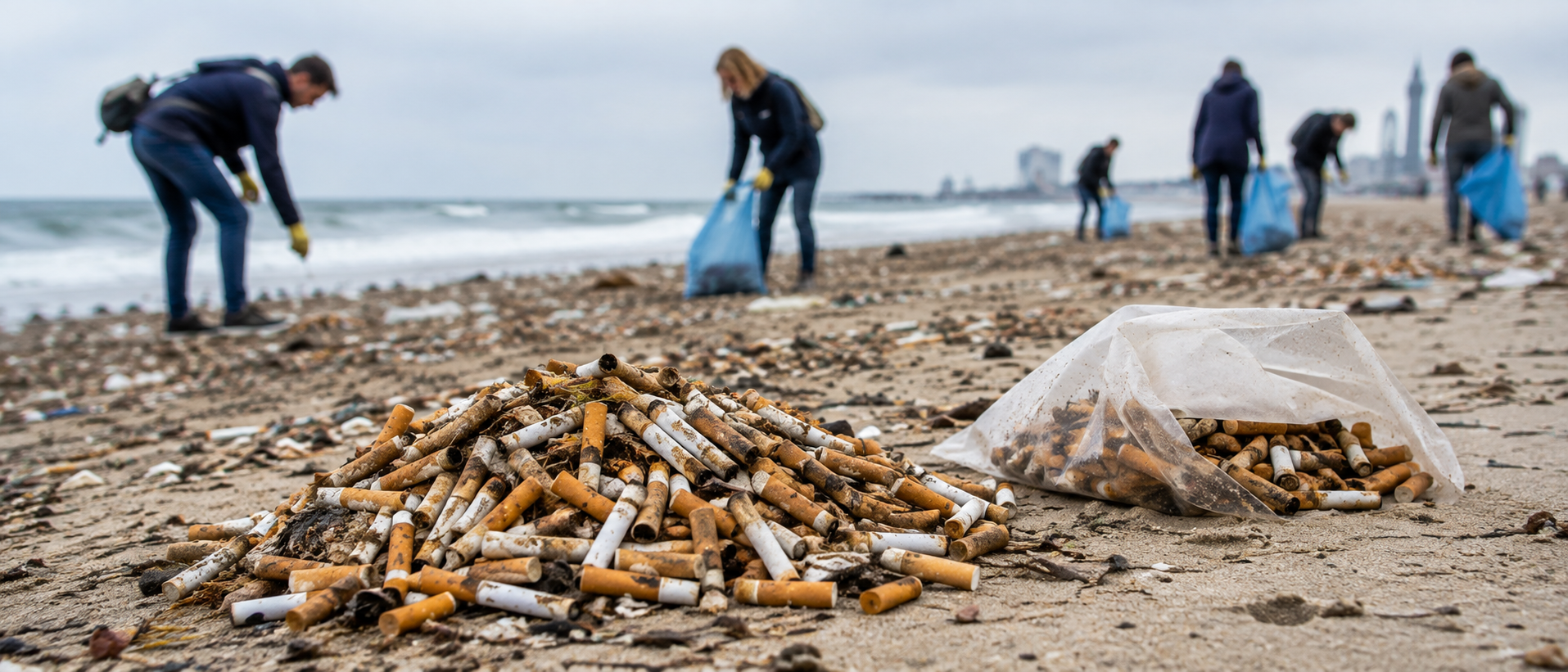
By the time the cleanup wrapped up, teams had hauled away a total of 4,175 kilograms of waste. Cigarette butts made up a troubling share of that total, and the people behind the initiative say the numbers point to a problem that keeps getting worse rather than better.
Why These Small Butts Cause Big Problems
It's easy to overlook a cigarette butt lying in the sand, but these tiny objects carry an outsized environmental cost. Roughly 95 percent of a cigarette filter is made from plastic, meaning it never truly breaks down. Instead, it slowly crumbles into microplastic particles that linger in the environment for years. Ewout van Galen, who heads the organization behind the cleanup, explained that a single discarded butt has the potential to contaminate as much as 1,000 liters of seawater. From there, those toxins and plastic fragments often end up inside the bodies of seabirds, fish, and other marine animals that mistake them for food or simply absorb them from polluted water.
To put the scale of the issue in perspective, last year's cleanup turned up 51,863 butts. This year's count climbed well past that figure, underscoring just how much smoking waste continues to pile up on beaches despite growing awareness campaigns.
Smoke-Free Beaches Gaining Ground
In response to the growing pollution problem, the organization is pushing for two major changes: designated smoke-free beaches and an outright ban on plastic cigarette filters. Some coastal towns have already started taking steps in that direction. Scheveningen beach now has four separate zones where smoking isn't allowed, and Zandvoort recently rolled out its own pilot program featuring three smoke-free areas this year.
Beyond the sheer number of cigarette butts, cleanup crews stumbled upon a handful of odd and eye-opening finds scattered across the sand. Among the strange discoveries were an old videotape, a chocolate bar wrapper dating back to 1991, and plastic bottles that had drifted in from as far away as China and Malaysia. Finds such as these serve as a stark reminder that plastic waste doesn't just linger; it travels, drifting across oceans and washing up on shores thousands of miles from where it was first tossed aside.