 1 month Ago
A Fortune That Defies Comprehension
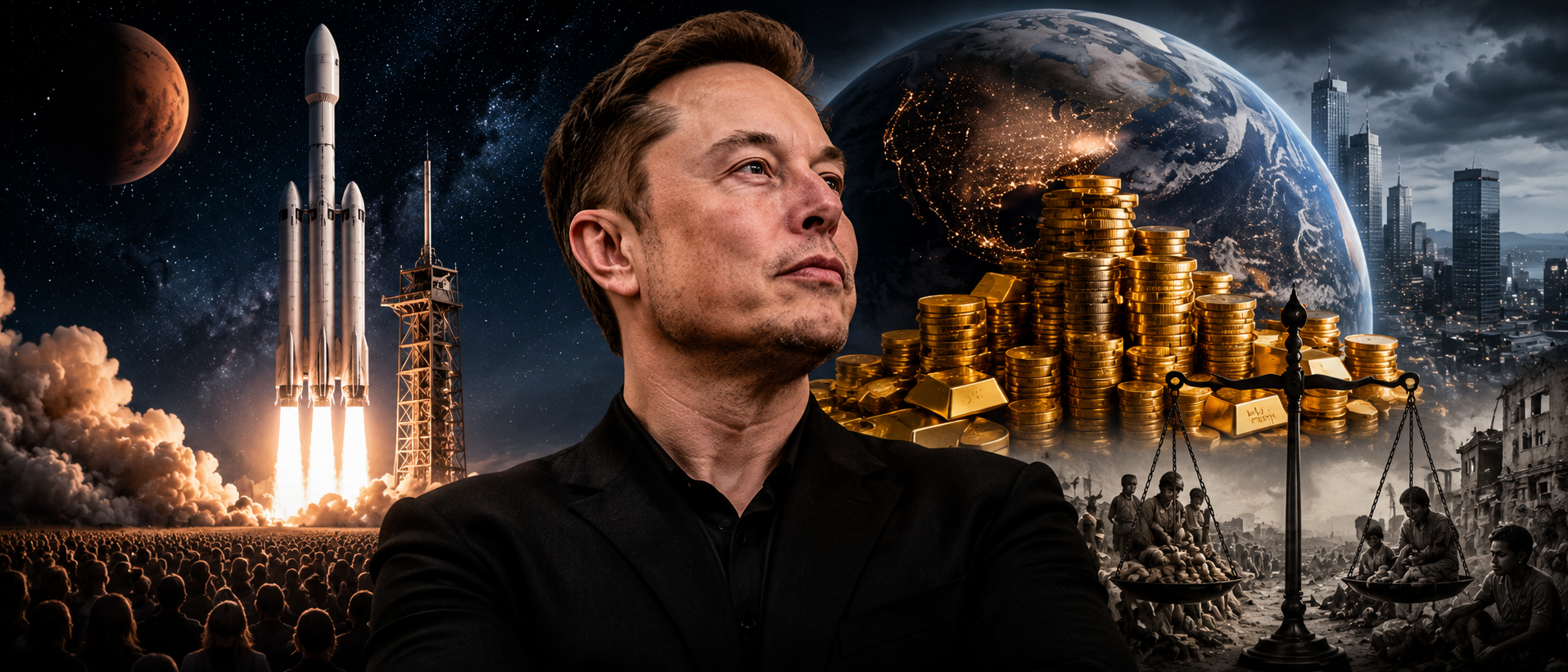
To understand the scale of what we are talking about, a trillion is a one followed by twelve zeros. Over just the past year alone, Musk's wealth has grown by more than 550 billion dollars — working out to around 1 million dollars every single minute. That kind of accumulation is difficult to picture in everyday terms, but analysts point out that a 10 percent tax on his projected 1 trillion dollar fortune could theoretically fund a full year of global efforts to eliminate extreme poverty, potentially pulling more than 800 million people above the poverty line in one go.
Experts studying economic inequality have raised alarms about what this level of individual wealth actually means for society. "A trillion dollars in the hands of one person is not only incompatible with a healthy economy but also with a healthy democracy. Such economic power inevitably translates into political influence," said Bram Joanknecht, an economic equality specialist. He went further, arguing that the world's wealthiest individuals are now using their fortunes more openly than ever to shape politics and public opinion. Musk, he noted, plays a central role in that pattern — in part through his ownership of the social media platform X.
Wealth, Power, and Political Reach
The analysis raises pointed questions about how Musk's fortune was built and what it funds. SpaceX pulls in roughly one-fifth of its revenue from contracts with the United States federal government, yet the company is believed to have paid little to no federal corporate income tax, benefiting from provisions introduced under the Tax Cuts and Jobs Act. Critics argue this represents a troubling loop — public money flowing in, while tax obligations flow out.
Musk's brief tenure heading DOGE, a government efficiency body, drew further scrutiny. Under his watch, significant parts of federal infrastructure were scaled back, including the U.S. Agency for International Development, an organization that delivered aid to some of the most vulnerable populations both within the U.S. and abroad.
On the information front, concerns about X have grown sharply since Musk took over the platform. Shortly after the acquisition, the company's Trust and Safety teams and its Human Rights department were dismantled. In the weeks leading up to the 2024 U.S. election, false or misleading posts by Musk about the vote reportedly reached 2 billion views on the platform. Separately, a University of California study found that hate speech on X climbed by around 50 percent in the months following his takeover. Analysts tracking the relationship between extreme wealth and political power estimate that billionaires are more than 4,000 times more likely to hold political office than ordinary citizens — a figure that speaks to a much deeper structural problem than any one individual.
Calls are growing for governments to act — through stronger taxes on extreme wealth, curbs on corporate monopolies, expanded public investment, and better protections for workers and wages. Whether those calls will find traction remains to be seen.