 3 months Ago
The people living there are not typical nursing home residents. They are older adults with serious substance use disorders who also have complex physical or psychiatric conditions. For years, many of them had nowhere to go — too unwell for independent addiction housing, but not fitting the mold of a standard nursing home either. De Waalboog was created specifically for people stuck in that gap.
A Model Built Around Reality, Not Just Recovery
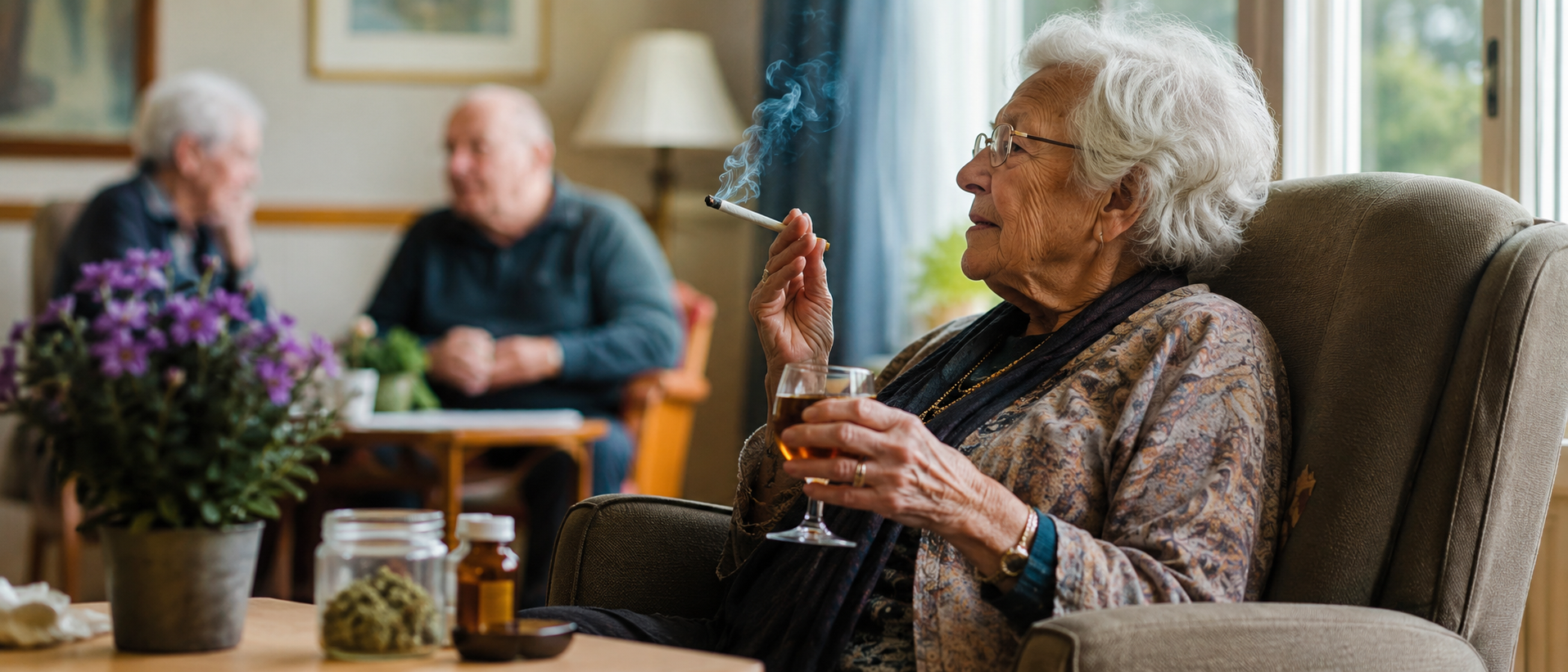
At the heart of the De Waalboog approach is a simple but significant shift in thinking: abstinence is not the goal. Residents receive standard elderly care alongside regulated access to alcohol, cannabis, or substitution medications like methadone. The quantities and timing are agreed upon between residents and their caregivers, making substance use a managed part of daily life rather than a hidden or chaotic one.
Ewoud de Jong, a physician at the facility, put it plainly. Older people with addictions often don't qualify for traditional nursing homes, he explained, while psychiatric and addiction care settings aren't equipped to handle serious physical decline. De Waalboog bridges the divide by bringing in external experts in addiction and psychiatry to work alongside its in-house geriatric care team.
One resident, a 59-year-old woman named Door, previously struggled with cocaine and heroin addiction. She now receives methadone twice a day on a fixed schedule. She described the care she receives here as something she never thought she'd find in an elderly care setting — structured, supportive, and non-judgmental. "I am happy that it is possible here," she said.
Residents have a fair degree of freedom. Some spend their days on the balcony; others head into the city center. Their overall functioning is reviewed each week, but the focus remains on quality of life. If a resident ever reaches a point where detoxing becomes a real possibility, that is seen as a welcome development — but never the target.
Experts Welcome the Idea, With Caveats
The initiative has sparked genuine interest among health professionals, though not without some measured concern. Data from the national Alcohol and Drugs Information System, Ladis, shows that excessive alcohol and opioid use is more common among older adults than in many other groups. Meanwhile, national statistics from 2024 show that police logged over 60,000 cases of unexplained behavior, with more than 18 percent involving people aged 65 or older — figures the Salvation Army links partly to substance use.
Bianca Buurman, a professor and chair of the professional nursing and caregiving association, welcomed the model. She noted that nurses frequently struggle when patients combine addiction with serious physical illness, partly because nursing homes often lack mental health expertise, and mental health settings often lack the tools to handle complex physical conditions. Combining that knowledge in one place, she said, could make a real difference.
Still, others urge caution. Wilco Sliedrecht, chair of the Association for Addiction Medicine, pointed out that addiction is often rooted in deeper struggles — depression, trauma, or a sense of meaninglessness. Regulated use, he argued, should not become an endpoint. Alternatives that offer purpose and connection matter too, and he recommended reviewing each resident's situation every six months to keep the door open for recovery.
The Dutch Association for Mental Health Care echoed that view, emphasizing that quality of life must come first — but that reducing health harm remains important. Full abstinence, the organization acknowledged, is simply not achievable for everyone.
What De Waalboog represents, at its core, is a willingness to meet people where they are. For a population that has long struggled to find a place in the care system, that may be exactly what was missing.