 5 months Ago
Why So Many Are Falling Through the Cracks
The Dutch state pension system, known as the AOW, is built on a straightforward principle: the longer you live in the Netherlands, the more pension you receive. A complete benefit requires 50 years of residency. For every year short of that, the payout is reduced by 2 percent. So someone who spent 40 years in the country walks away with 20 percent less than the full amount — a significant cut for anyone living on a fixed income.
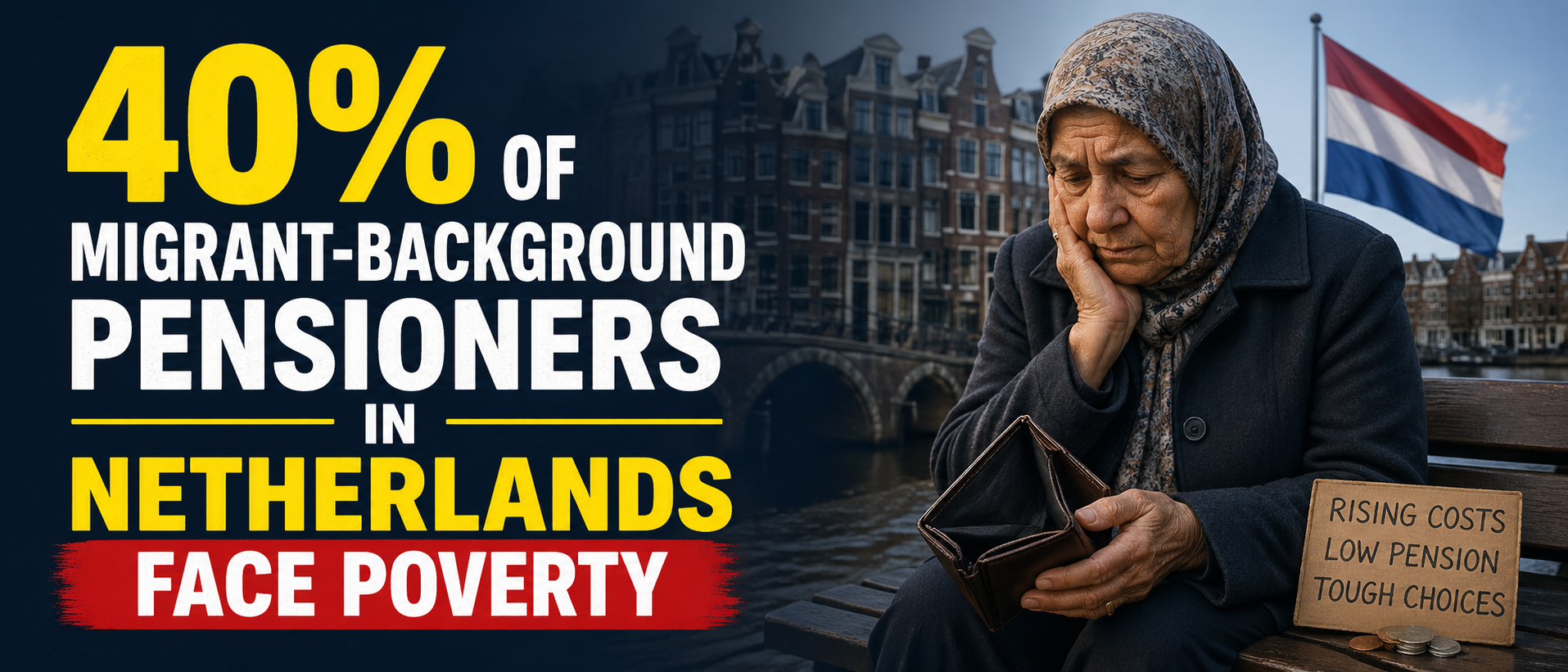
Researchers have found that 40 percent of pensioners originally from Morocco and Turkey are now living in poverty. That same figure is expected to apply in the coming years to retirees from Afghanistan, Iraq, and Poland. The contrast with the broader population is stark — only 3 to 6 percent of retirees without a migration background, or those from Western European countries, find themselves in the same position.
Jelle Lössbroek, a researcher at the Netherlands Interdisciplinary Demographic Institute, known as NIDI, has studied this issue closely. He points to a double disadvantage these workers faced throughout their careers. "In the years that they were working, they often earned fewer euros per hour than Dutch people without a migration background, for various reasons on the labor market," Lössbroek explained. "Moreover, they also often receive less pension, because in those sectors you build up less pension per earned euro." It was a compounding problem — lower wages meant lower pension contributions, and working in industries with weak pension schemes made things worse still.
The scale of the issue is growing fast. At the start of this century, around 200,000 retirees in the Netherlands had migration backgrounds. That number has since doubled to 400,000, and projections suggest it will reach 900,000 by 2050. Not everyone in that group will fall into poverty — the threshold is set at 1,500 euros a month for a single person and 2,000 euros for a couple — but the sharpest growth is expected among the most financially vulnerable.
Fear, Shame, and a Safety Net Going Unused
The financial strain is not just a numbers problem. Pension poverty is bringing real human consequences — stress, shame, deteriorating health, and social isolation. Families are feeling it too. Adult children are quietly stepping in to cover basic living costs for their parents. One man, Tarik, regularly helps his mother pay her bills, a responsibility that falls on many in similar situations across the country.
There is a government safety net available. The Supplementary Income Provision for the Elderly, called the AIO, exists precisely for situations like this. But take-up among eligible migrants is alarmingly low. Lössbroek estimates that at least one-third of those who qualify either do not know the program exists or are too frightened to apply.
Tarik Uçar, a board member at the Cleaning Industry Pension Fund, sees this fear firsthand. Thousands of fund members slip below the poverty line after retiring, and despite his efforts to spread awareness of the AIO, he consistently runs into resistance. "If people do know the AIO, there is often a great fear that they have to repay it, or that their allowances will be cut," Uçar said. He links much of this anxiety to the Netherlands' widely publicised childcare benefits scandal, in which thousands of families were wrongly accused of fraud by the tax authority. That episode left a deep distrust of government support programs among many communities — a distrust that is now costing vulnerable pensioners dearly.
Lössbroek says the trajectory of the problem should be a wake-up call. "We have agreed together on the poverty line," he said. "We actually want no one to fall below it. That is the bottom line." With nearly a million retirees with migration backgrounds expected by mid-century, that collective agreement will need more than words to hold.