 3 months Ago
A New Face of Homelessness
Marcel van de Ven, who founded Stichting Binnenslapers in Rotterdam, works directly with this overlooked group. He describes it as an almost entirely new category of need. Divorce, the end of a temporary lease, or a sudden life change can now be enough to push someone out of housing altogether, not because they've lost their job or fallen into addiction, but because there's nowhere for them to go.
Van de Ven estimates that Rotterdam alone is home to somewhere between 8,000 and 9,000 people in this situation. That's a striking number for a group most people don't even realize exists.
He pushes back hard against the usual stereotypes. Homelessness, he says, isn't only about people rifling through bins or struggling with substance abuse. Increasingly, it looks like ordinary working people who had their lives on track until, as he puts it, everything suddenly fell apart.
Part of the problem, according to Van de Ven, is that these individuals rarely qualify for municipal support. Because they're employed, earn an income, and often still have friends or family around them, they're quickly labelled self-sufficient, and the conversation ends there. He argues that's exactly the wrong approach. Even two weeks without a home, he warns, can be enough to send someone into a downward spiral. Clear thinking becomes difficult, daily life turns into pure survival, and that pressure can open the door to alcohol or drug problems that weren't there before.
One Father's Story
Among those Stichting Binnenslapers has supported is a man who goes by the pseudonym Jaap, chosen to protect his privacy. Jaap became homeless together with his five-year-old son after his marriage ended. He still holds down a job and walks his son to school every morning, but he dreads the idea of other parents in the schoolyard finding out about his situation. He worries people would see him differently, even though, as he puts it, none of this was really his fault.
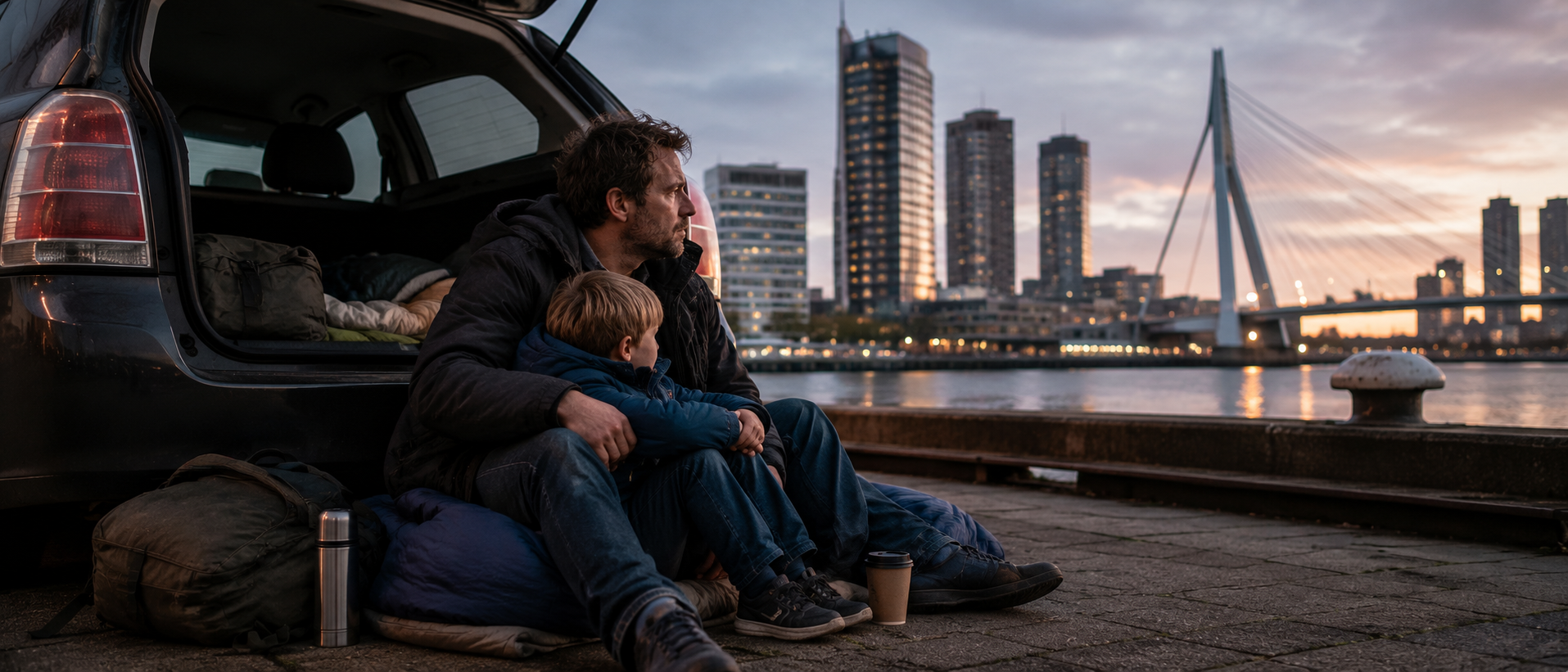
In the beginning, Jaap and his son got by sleeping on friends' sofas. For a while, they stayed with Jaap's mother, but she lives in a housing facility for seniors, and the arrangement couldn't continue, especially with a young child involved. Once every other option had run out, father and son ended up sleeping in Jaap's car, parked well outside the city.
Looking back on that time is still painful for him. He describes feeling overwhelmed by anger and sadness, and deeply ashamed of where he'd ended up. He'd believed he was doing everything right, and yet this happened anyway. All he wanted, he says, was a stable life for his son.
Falling Through the System's Cracks
When Jaap turned to the municipality for help, he was told he didn't qualify because he was considered self-reliant. He found that response deeply unfair. At one point, he even considered quitting his job altogether, reasoning that if he gave up his income and relied entirely on benefits, the system might finally take notice.
Eventually, he found Stichting Binnenslapers, which placed him and his son in a temporary shelter, often referred to as a transient hotel, for three months, and paired him with a personal buddy to help him search for permanent housing. Through the foundation's support, he now has a real prospect of a home again, something he says has given him a sense of hope he hadn't felt in a long time.
To shield his son from the weight of it all, Jaap has kept things light, telling the boy they're simply on an extended stay at a hotel, like a kind of holiday. He suspects his son is still too young to fully grasp what's really happening, and strangely, he's grateful for that.