 5 months Ago
Smoke Blankets Multiple Provinces as Firefighters Battle the Blaze
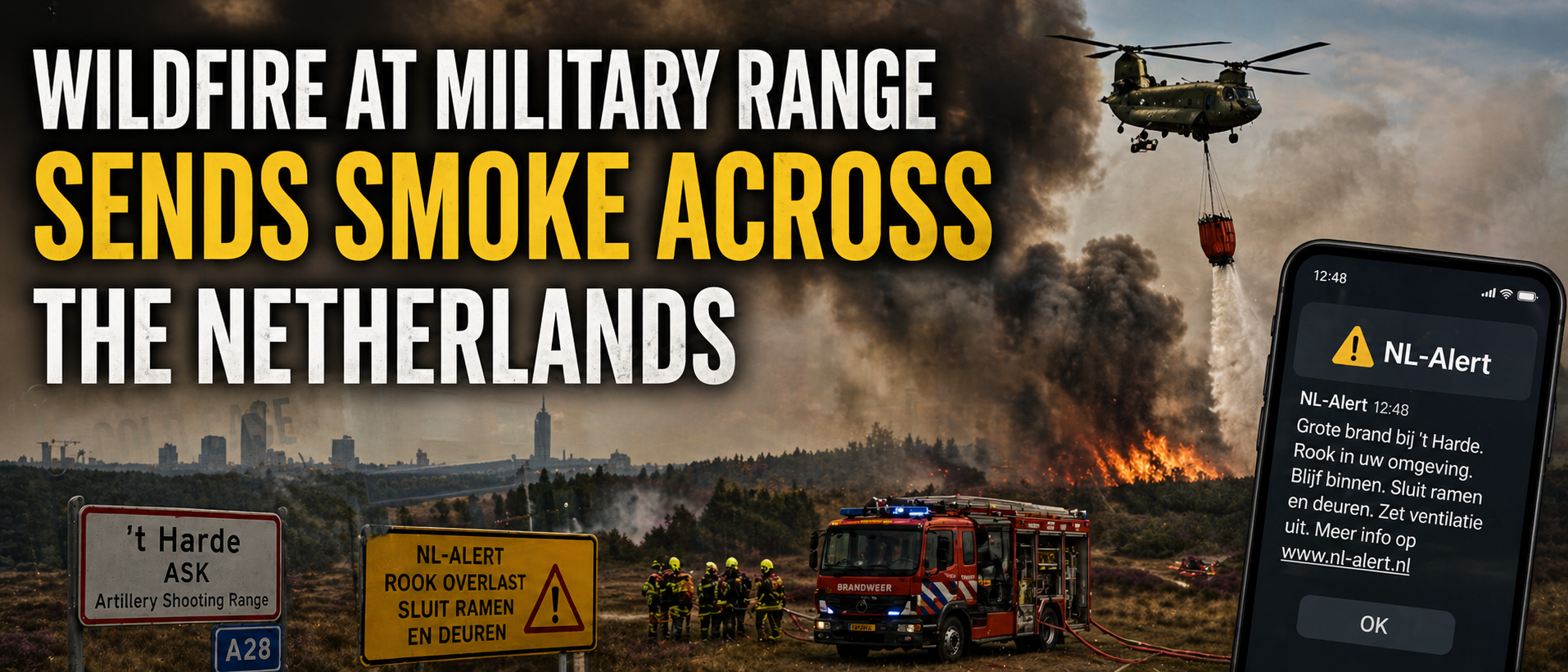
Edwin Kok, National Coordinator for Wildfire Management at the Netherlands Institute for Public Safety (NIPV), described the fire as unusually large by Dutch standards. He cautioned that, depending on how the weather behaves, firefighting efforts could stretch on for several days. The Amsterdam-Amstelland Safety Region confirmed that wind conditions were pushing the smoke directly toward the capital, prompting a surge of calls to emergency control rooms from residents reporting smoke nuisance. Journalists in Amsterdam described the air as visibly grey and hazy, with a strong smell of smoke hanging over the city.
The NL-Alert system was used to push urgent warnings to residents across Noord-Holland, Flevoland, Gelderland, and Utrecht. Towns including Almere, Lelystad, Hilversum, and parts of Amersfoort all fell within the alert zone. The affected area extended from the coast north of Swifterbant all the way to Epe and Apeldoorn in the east, Soest to the south, and Muiden to the west. People in these areas were told to stay out of the smoke, shut windows and doors, and switch off any ventilation systems running automatically.
A major firefighting operation was launched without delay. The Ministry of Defense deployed two Chinook helicopters equipped with Bambi Buckets, each capable of dropping up to 7,600 litres of water per run. Large numbers of personnel and equipment were also sent to the scene on the ground.
Military Site, Dry Conditions, and a Wider Crisis
The ASK near 't Harde is no ordinary piece of land. It serves as a military training and live-fire facility and is the only location in the Netherlands where mortars and other artillery systems are legally permitted to operate. On the day the fire broke out, scheduled training activities included rifle and machine-gun fire, artillery, and the use of explosives. The cause of the wildfire, however, has not yet been determined.
The timing is significant. Much of the Netherlands has been experiencing a prolonged dry spell, pushing wildfire risk to elevated levels across the country. Authorities in Gelderland had already issued warnings about increased fire danger before this incident unfolded. Earlier the same day, smaller fires also broke out in Helden in Limburg and in Oosterhout in Noord-Brabant, though both were contained relatively quickly by emergency services.
To manage the growing number of incidents, a national coordination centre was set up in Zeist. Kok stressed the importance of a coordinated response given that multiple fires were burning simultaneously across the country, while making clear that the 't Harde fire remained the top priority due to its scale. The A28 motorway between Wezep and 't Harde was closed in both directions as a safety precaution, with drivers directed to use the A1 and A50 via Apeldoorn as an alternative route.