 5 months Ago
What the New Pricing Plan Actually Means
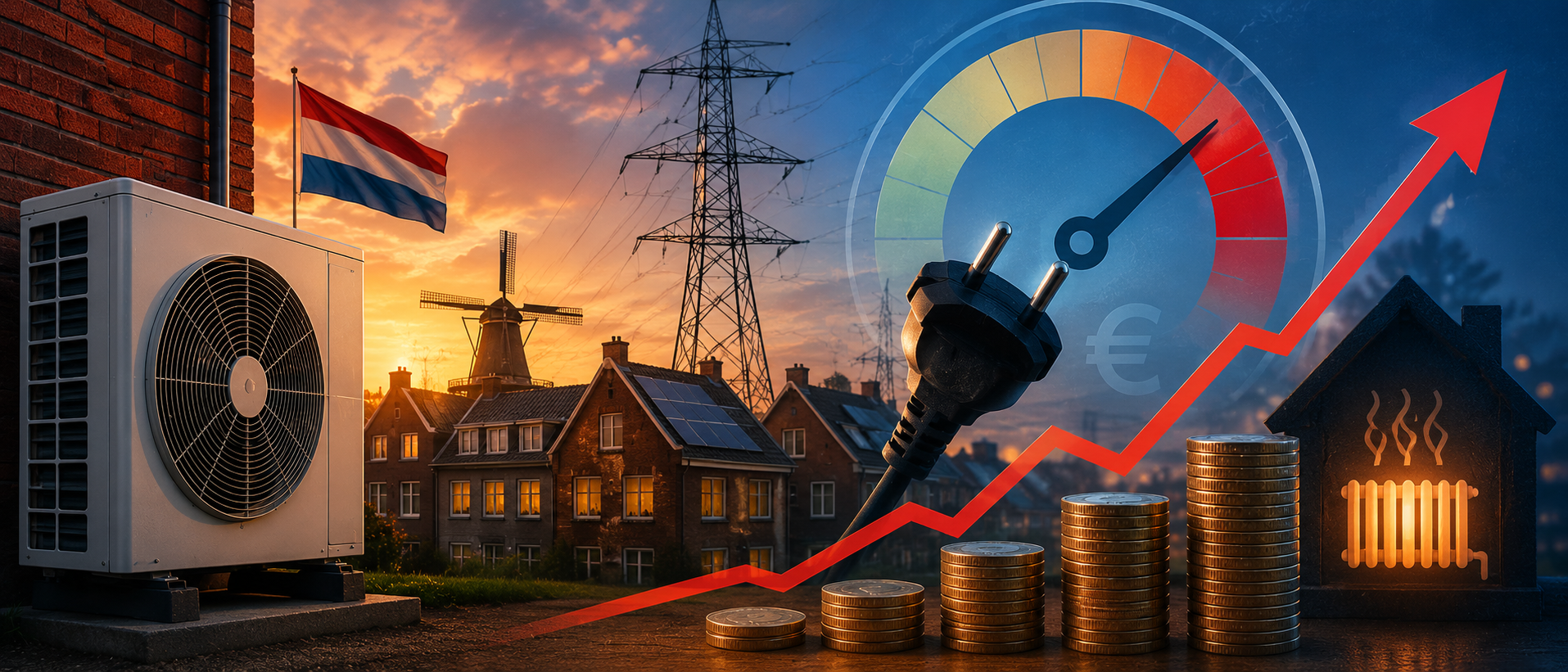
Starting in 2029, Dutch households would no longer pay a mostly flat annual grid fee. Instead, a portion of the cost would become variable — meaning what you pay depends on when you use electricity, how much you use, and what season it is. Peak hours between 4 p.m. and 11 p.m. would carry the steepest charges, winter usage would cost more than summer, and heavier electricity users would face higher bills overall.
Grid operators and the Dutch government argue this shift is necessary. The electricity network is under significant strain, and spreading out demand across the day would ease congestion. The approach has already shown results in the business sector — when national grid operator TenneT introduced a similar variable tariff for companies, peak-time consumption dropped by 7.1 percent.
For ordinary households, though, the numbers look troubling. Consulting firm Berenschot estimates that annual grid costs for a fully electric home could climb from around 558 euros to as high as 1,149 euros. Households that actively adjust their habits — like preheating their homes during cheaper hours — might limit that increase to around 782 euros annually. But as independent energy consultant Jos Dings pointed out, that kind of flexibility isn't available to everyone. "Not every house is insulated well enough for it to stay warm until the evening," he said.
The Dutch Heat Pump Association has voiced "major concerns" about the proposal. Chairman Frank Agterberg warned that people thinking about buying a heat pump could soon face "perhaps even a doubling" of electricity prices during the most expensive time blocks. The association is currently calculating how much the new system could extend the payback period for heat pump investments. Dings added that payback periods for both hybrid and fully electric heat pumps could stretch beyond 10 years — up from the current 7 to 8 years.
A Conflict With the Government's Own Climate Goals
The timing creates an awkward contradiction. The Dutch government has been pushing households to ditch gas boilers in favor of heat pumps, with plans to require hybrid heat pump installations starting in 2029 — the same year the new pricing model would kick in. Heat pumps naturally consume the most electricity during cold winter evenings, which happen to be exactly the hours that would attract the highest charges under this proposal.
Olof van der Gaag of the Dutch Association for Sustainable Energy put it bluntly: the expensive pricing blocks apply "exactly when people use their heat pump."
Currently, customers of grid operator Enexis pay around 475 euros per year in grid fees. That figure is already expected to rise to roughly 558 euros by 2029 due to the cost of expanding the grid — and the new variable pricing would add another layer on top of that.
Some alternatives exist, but they come with limitations. Home batteries could help households store cheaper off-peak electricity, though Dings noted that many families simply cannot afford them. Solar panels offer little relief in winter, when the sun is weak, and heating demand is highest. "During the winter months, self-generated solar energy is scarce, so this often will not ease the pain either," he said.
Critics are already calling for the plan to be revised. Dings suggested that the discounted pricing window should be made even cheaper, and that the expensive evening period should end earlier — arguing that grid congestion is largely gone by 10:30 p.m. Van der Gaag called on the government to introduce stronger support measures, including higher subsidies for heat pump purchases and, more importantly, lower electricity taxes.
The proposal is still being reviewed. The Authority for Consumers and Markets will examine the plans in the coming months, hold a public consultation over the summer, and aims to finalize the new tariffs before the end of the year. The Ministry of Economic Affairs and Climate Policy said it is continuously monitoring how new rules affect heat pump adoption, and acknowledged that possible compensation for affected households is "still being examined" — though no concrete plans have been announced yet.