 5 months Ago
Buffer Zones Blocking Growth at City Edges
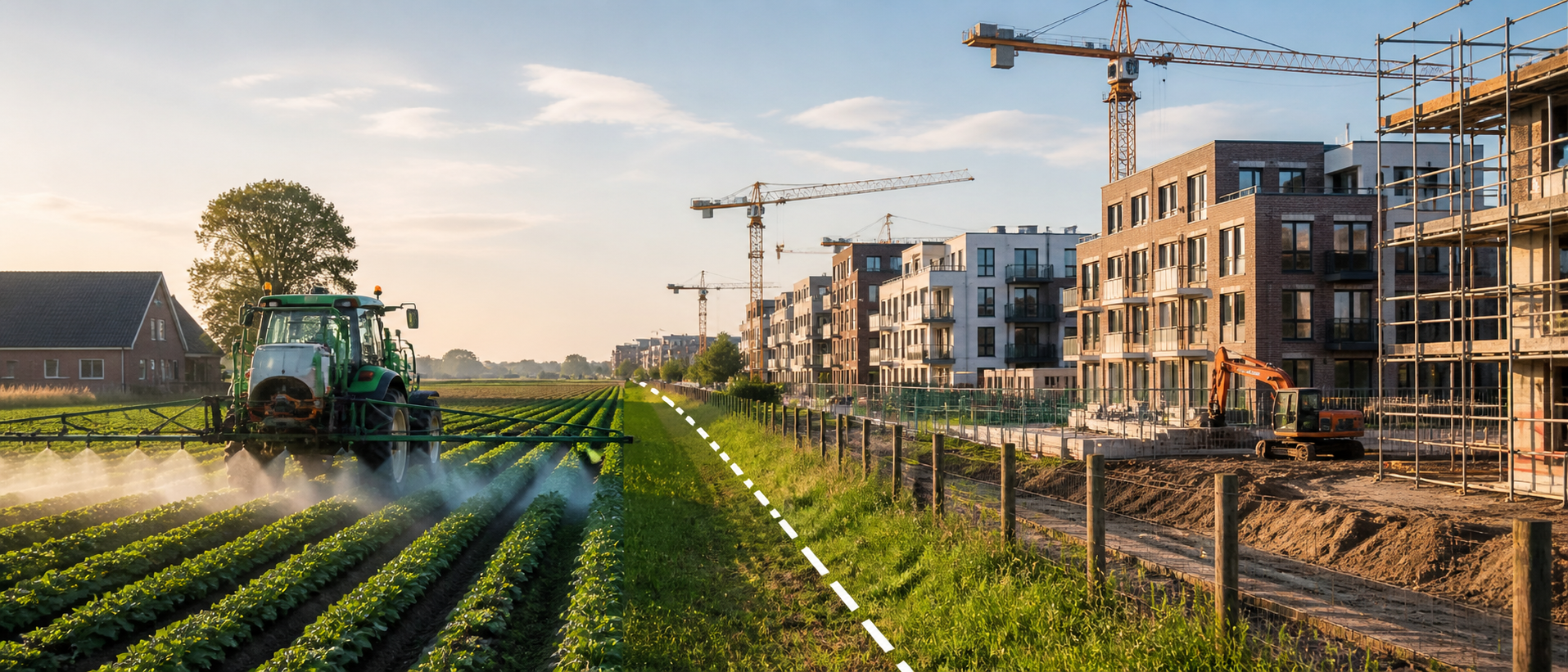
The rule is creating real bottlenecks in places where cities naturally expand — their outer edges, which often border farmland. The Vereniging van Nederlandse Gemeenten is actively working with at least 20 municipalities where housing projects are stalled, and estimates that more than 40 municipalities nationwide are caught in the same bind. The Interprovinciaal Overleg, which represents Dutch provinces, found that around one-third of planned housing projects in both Drenthe and Limburg are directly affected.
It is not just homes either — schools and healthcare facilities face the same restrictions, making the issue broader than a simple construction delay. All of this is hitting hard against the national ambition of delivering 100,000 new homes every year, a target that officials have already warned is under serious strain.
Farmers, Lawyers, and a Rule With Grey Areas
What makes this situation more complicated is how the rule is being applied. Legal experts point out that the blanket 50-meter zone is not always scientifically justified, since only a fraction of agricultural land involves crops that require heavy pesticide use. Yet the rule applies regardless. Lawyer Caren Schipperus, who specializes in project development, says some farmers are strategically using the buffer requirement to block nearby housing developments — even when their land poses little actual risk.
She noted that while the restriction makes clear sense near flower cultivation or fruit-growing operations, she regularly encounters livestock farmers with nothing but grassland who invoke it simply to preserve future options. One such farmer, Gerrit, openly admitted he wants to retain his spraying permit so that any future buyer of his land would have the flexibility to use pesticides — even if he currently does not. Researchers at Wageningen University and Research and the national public health institute RIVM are now studying the actual risks involved and working toward updated guidelines. Their findings are expected in July, and experts caution that the research may actually reveal the 50-meter rule is not strict enough in areas with intensive pesticide-dependent farming.