 5 months Ago
What the Numbers Say
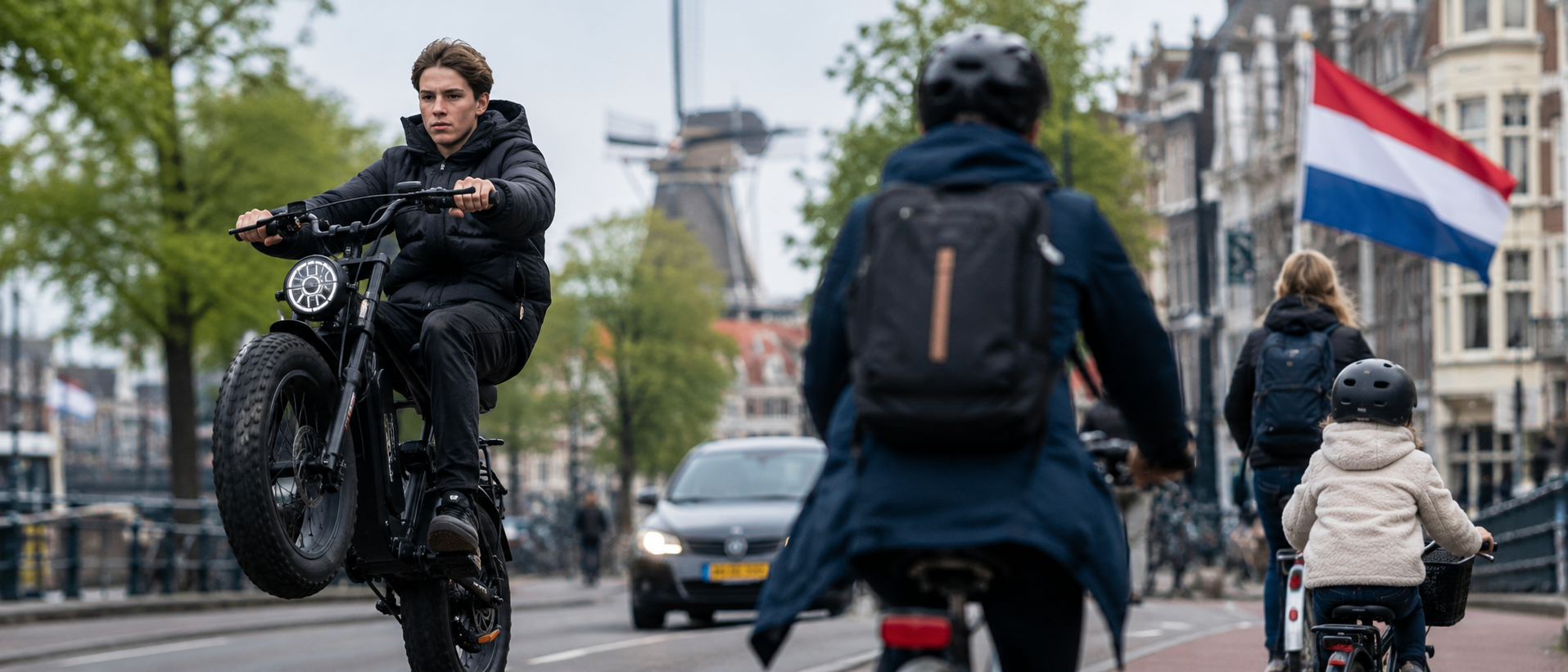
The research, carried out by Motivaction, surveyed 527 adults and 421 teenagers between the ages of 12 and 18. The findings paint a picture of widespread unease, cutting across generations. Three-quarters of adults said they worry about children and young people riding e-bikes and fatbikes. Two-thirds believe e-bikes are inherently more dangerous than regular bicycles — and for fatbikes specifically, that figure climbs to 84 percent.
Support for concrete safety measures is strong across the board. Two-thirds of Dutch adults back an age limit of 14 for all e-bikes. More than 60 percent want mandatory helmets for anyone under 18. What's particularly notable is that teenagers themselves are largely on board. A majority of young people surveyed supported both an age limit of 14 and a helmet requirement, with support for mandatory helmets among teens coming in at 48 percent — just shy of a majority.
RAI Vereniging Chairman Frits van Bruggen admitted the level of public support caught even him off guard. "If we had commissioned this study ten years ago, the results would likely have been very different," he said. For him, the shift reflects just how urgent road safety has become. He pointed to stark figures: in the most recent year on record, 759 people died in traffic across the Netherlands, 281 of them cyclists. On top of that, 81,000 cyclists ended up in emergency rooms — a 9 percent increase compared to the previous year. "The number of cyclist fatalities urgently needs to come down, as does the number of injuries," van Bruggen said.
Enforcement Is the Missing Piece
While the public debate has largely focused on fatbike-specific rules — something Infrastructure Minister Vincent Karremans is currently working on — the RAI Vereniging is sceptical that targeting fatbikes alone will do much good. Van Bruggen noted that multiple government-commissioned studies have flagged serious legal hurdles with that approach, which is why the association is pushing for rules that cover all e-bikes rather than singling out one category.
But even well-designed rules won't fix the problem without serious enforcement, he warned. A flood of cheap, illegal fatbikes entering the country remains a major concern, and van Bruggen was direct about what needs to happen. Customs authorities need to step up. Regulatory bodies like the Human Environment and Transport Inspectorate and the Netherlands Food and Consumer Product Safety Authority need to do their jobs properly. And street-level checks need to actually happen. "A helmet mandate for young people and a minimum age are pieces in a much larger puzzle," he said. Without the enforcement side working in parallel, he argued, even the best regulations will fall flat.